The Boxer Bond: Why This Breed Loves Hard, Protects Deep, and Stays By Your Side

Disclosure: This article contains affiliate links. I may earn from qualifying purchases at no extra cost to you. This is not veterinary advice.
If you’ve ever owned a Boxer, you’ve felt it.
They don’t just live with you — they attach to you. They follow you from room to room, lean into your legs, sit on your feet, and act like your personal shadow with a heartbeat. Boxer people call them “velcro dogs,” but that phrase doesn’t capture the full story.
This guide is the final part of a short Boxer Bond mini-series:
- Part 1: Why Boxers bond so deeply with their people
- Part 2: Is your Boxer too attached — or just being a Boxer?
- Part 3: How to strengthen the bond without creating anxiety
If you read those posts first, you already understand the basics.
This article is the complete framework — the full explanation of why the bond exists, how it forms, and how to support it so your Boxer becomes secure, confident, and calm… not clingy and stressed.
Because the Boxer Bond is beautiful — but when it’s misunderstood, it can quietly create problems like:
- separation stress
- destructive coping behaviors
- frustration and over-arousal
- leash reactivity driven by emotion
- difficulty settling at home
Let’s break it all down — the real reasons Boxers attach so deeply, what healthy attachment looks like, and how to build a bond that lasts a lifetime.
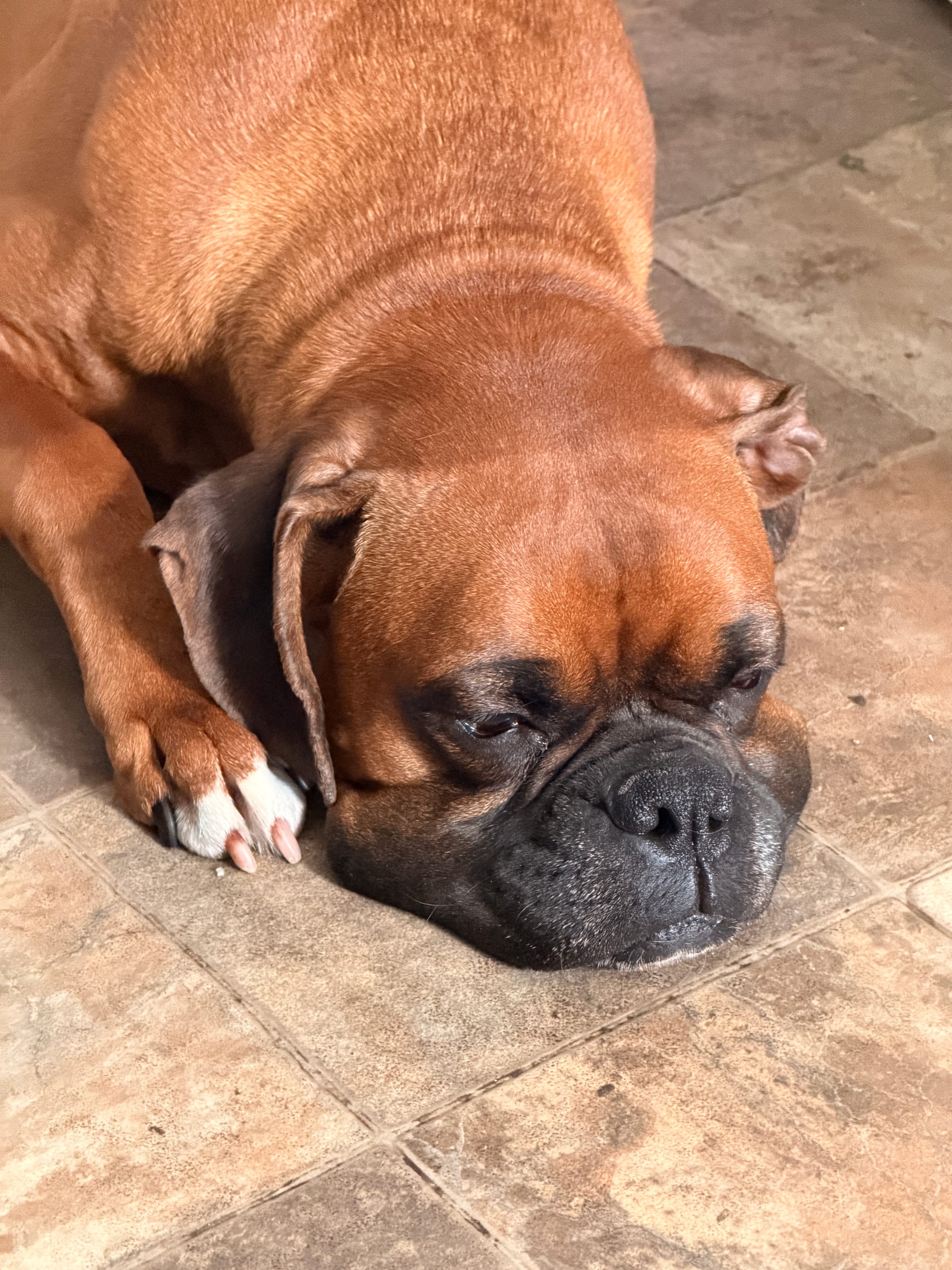
Boxers love big and close. Their centuries-old job—working side-by-side with people—wired them to read human emotion, commit to the team, and guard home base. The result is a joyful, sensitive, protective companion who thrives on structure, exercise, and daily togetherness. Build independence early, channel that guardian instinct into manners, and design a bedtime routine that lets everyone sleep.
A Love That Feels Like Family
Ask any Boxer person and you’ll hear the same refrain: this dog is family. Boxers have a way of moving through the day with you—following from room to room, checking in with soft eye contact, nudging your hand when you’ve worked too long. That closeness isn’t an accident. It’s the echo of a breed made to work shoulder-to-knee with people, making decisions in real time and staying connected.
Common signs of the Boxer bond
- Shadow-mode indoors; they want to be where you are.
- “Read-the-room” expression—Boxers are excellent at noticing tone and posture.
- Joyful reunions even after short absences—wiggle-butts included.
- Bedtime snuggles… sometimes on your pillow (more on that below).
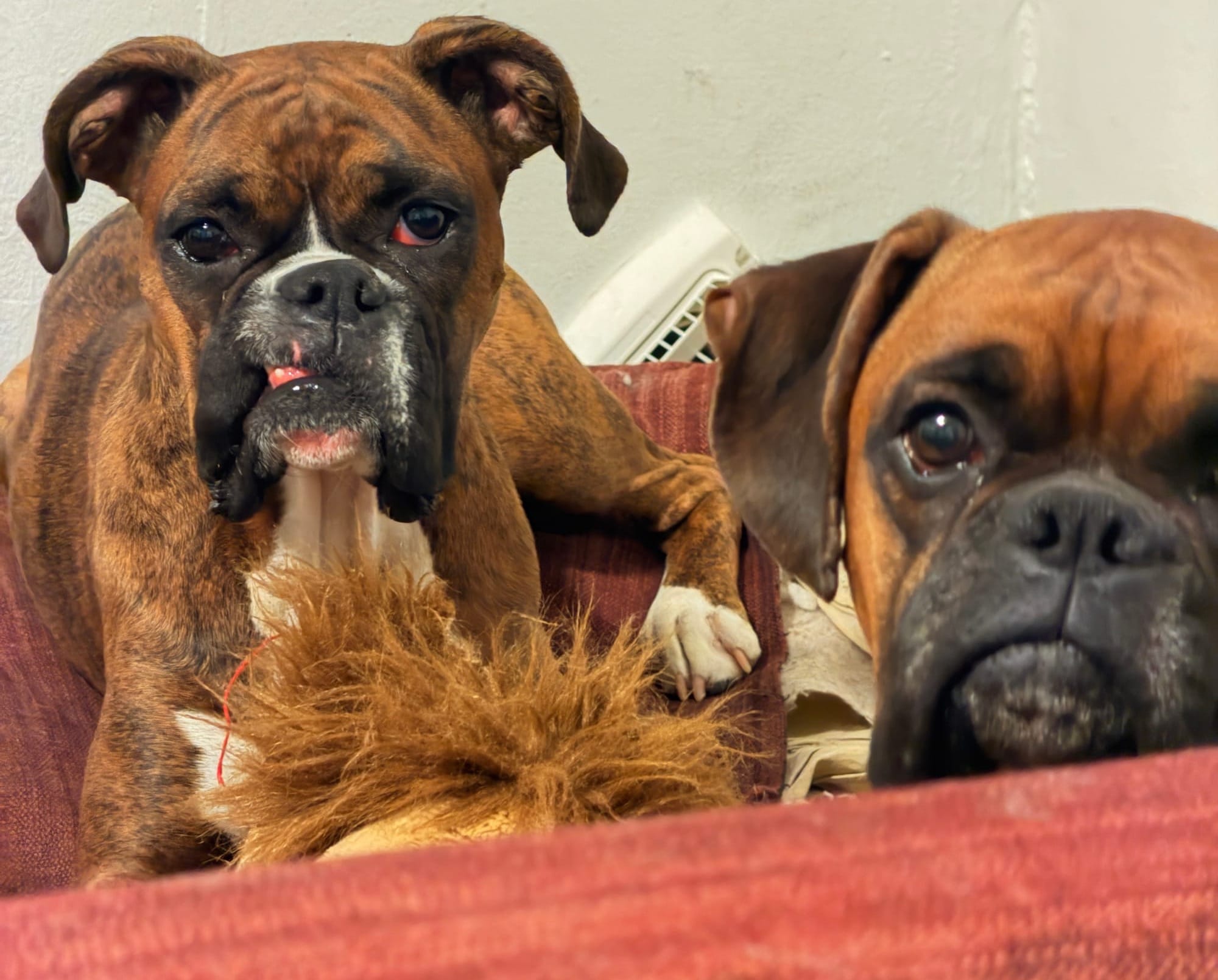
Where the Bond Began: Working Roots & Mastiff Influence
Boxers descend from working, mastiff-type catch dogs like the Bullenbeisser, later refined with early Bulldog blood. These dogs needed courage, handler focus, and a steady temperament—traits that still pulse through modern Boxers. As the breed moved from big-game and cattle work into city utility roles (police, messenger, sentry, wartime assistance), the connection to people intensified. A trustworthy partner had to be:
- Attentive to the handler (watching for signals),
- Self-controlled under pressure, and
- Protective without being hair-trigger.
That cocktail of qualities explains why today’s Boxers attach so deeply, stay close, and take family safety personally.

The Protector’s Heart: Watchful, Not Warlike
A well-bred Boxer is a watchful guardian—not a reckless brawler. Expect:
- Alert barking at the door or unfamiliar activity;
- A quick “scan and decide” loop once you engage (“Okay, Dad says it’s fine”);
- Strong preference to stand between you and uncertainty, especially at night.
Your role is to reward calm discernment. When your Boxer barks appropriately, thank them, investigate, then give a release word (“All good”). Over time, they learn that you lead the decision, and their job is to observe, inform, and settle.
How Boxers Attach: Velcro Tendencies Explained
Attachment is adaptive for a dog bred to work at a human’s hip. Boxers excel at:
- Proximity seeking: they like to be within petting distance.
- Social referencing: they look to you when unsure.
- Touch: head leans, paw taps, couch cuddles—contact is calming.
This bond can tip into over-attachment if every need (play, comfort, food) is only met when they’re glued to you. The fix isn’t less love; it’s structured independence (below).
Nurturing the Bond (Without Creating Clinginess)
- Daily structure: predictable walk, training, enrichment, rest.
- Place/Mat training: teach a reliable off-switch 10–20 minutes at a time.
- Alone-time reps: start with micro-absences while they enjoy a chew or snuffle mat.
- Handler clarity: reward eye contact and calm choices; keep feedback upbeat and consistent.
- Brain work: scent games, shaping, puzzle feeders. Tired brain = peaceful dog.
Bedtime Routines for Better Sleep (For Everyone)
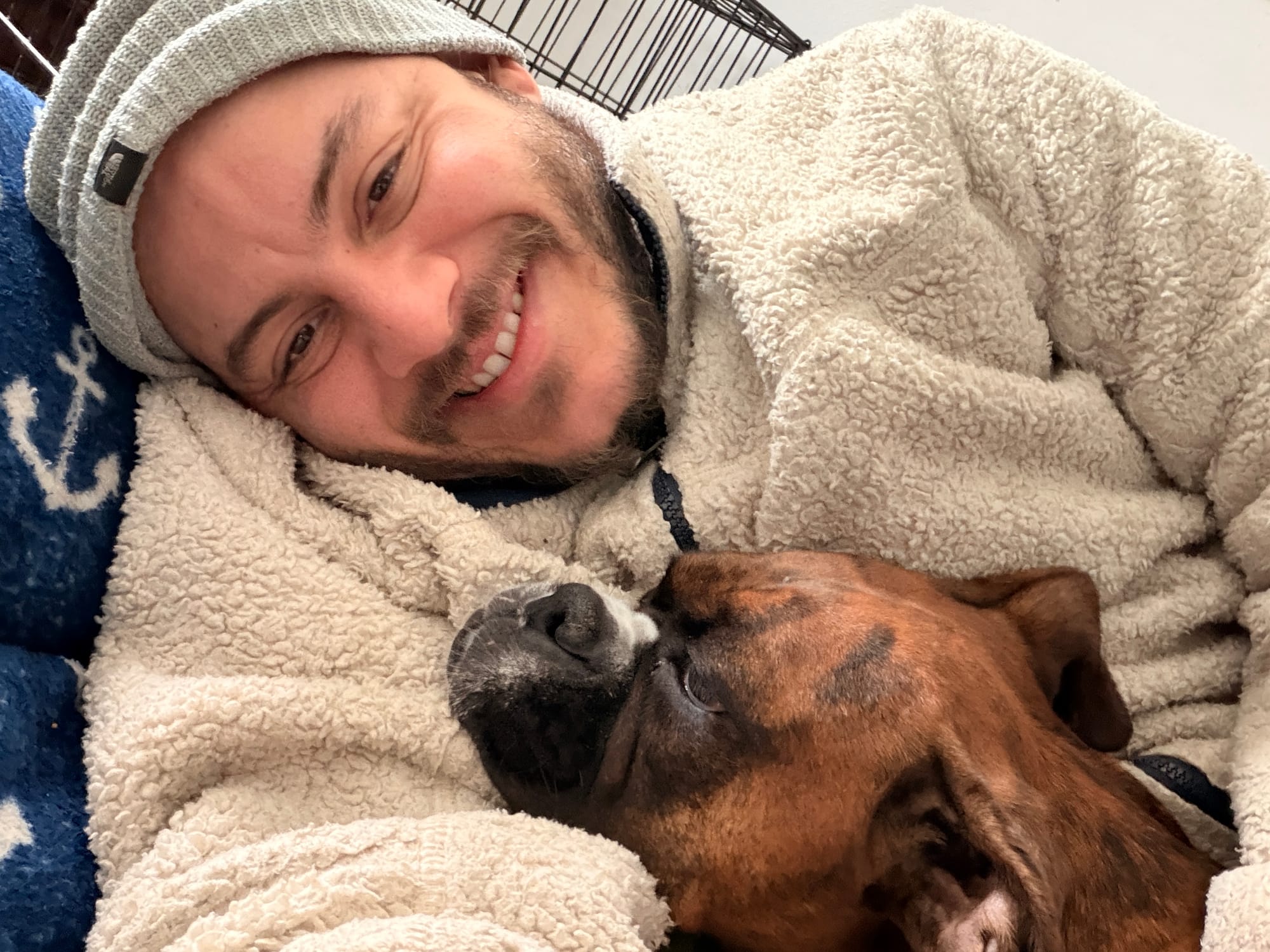
Even though many of us love nighttime cuddles, two or three Boxers in a small bed can turn into a windmill of paws. A good compromise: bedtime closeness with separate, cozy dog beds that live near your side.
Evening wind-down template
- 60–90 minutes before bed: light sniff-walk or decompression yard time
- 20 minutes before bed: snuffle mat or lick mat to lower arousal
- Last 10 minutes: settle on mat next to your bed, low lights, calm petting
- Lights out: release to their beds; treat for choosing calm
Recommended Sleep Gear (Affiliate Picks)
- Orthopedic Bolster Bed (XL) — joint-friendly, high side walls for Boxers who like to lean.
“Even though we love each other, sometimes sleeping with two or three Boxers is not ideal in a small bed. Here’s a bed that still shows you love them.” - Washable Plush Blanket — protects your couch/bed and gives your dog a familiar scent.
- Cooling Gel Pad — for hot sleepers and Texas summers.
- Calming Lick Mat (Bedtime Spread) — pair with a small lickable treat 10 minutes before lights out.
- Raised Cot (Spare Bed) — perfect for travel or guest rooms; promotes airflow.
Training the Guardian: Confidence Over Confrontation
Channel that protective spark into manners and discernment:
- Door protocols: sit or place when the bell rings; release on cue.
- Visitor intro ritual: leash on, sniff, handler praise for calm, then settle.
- Neighborhood neutrality: pay your dog for choosing you over drama (eye contact, loose-leash choices).
- Pattern games: predictable mini-routines (1-2-3 walking, hand targets) that reduce uncertainty.
- Recall = party: a fast, happy recall turns guardian alertness into handler focus.
FAQ
Do Boxers bond more with one person?
They often choose a “primary,” but Boxers are family dogs. Share feeding, training, and play to distribute attachment.
Is my Boxer protective or reactive?
Protective = alert, then responsive to your direction. Reactive = big emotions, poor recovery. Work on distance, pattern games, and calm reinforcement.
Can sleeping in the human bed cause separation issues?
Not by itself. Problems arise when all needs are met only at zero distance. Teach independence and you can enjoy cuddles and healthy space.
- Subscribe on YouTube for weekly Boxer care and training videos
- Download The Boxer Bond Routine Planner (PDF)
- Shop the Sleep & Snuggle Picks we use with our two Boxers
- Join the email list for new guides and gear deals
Made with love (and slobber) in Austin, Texas.


