How to Build a Calm Morning Routine for Your Boxer 🐾

The first 60 minutes decide the entire day for both you and your Boxer.
Not by chance.
By structure.
If your mornings are chaotic, rushed, and reactive…
your Boxer will carry that energy into the rest of the day.
But if your mornings are calm, intentional, and predictable?
👉 Everything changes.
Why Mornings Matter So Much
Boxers are emotional athletes.
They don’t just wake up and “go with the flow.”
They wake up ready to:
- Engage
- Move
- React
- Connect
If you don’t guide that energy early…
It turns into:
- Jumping
- Demand barking
- Restlessness
- Chaos that builds all day

The Goal of a Morning Routine
Not to exhaust your Boxer.
Not to “get it out of their system.”
👉 The goal is regulation.
You want your Boxer to start the day:
- Focused
- Grounded
- Able to settle later
The Calm Morning Blueprint
This doesn’t need to be complicated.
It just needs to be consistent.

1. Calm Wake-Up (No Chaos Starts)
The first 5–10 minutes matter more than you think.
Avoid:
- Hyping them up immediately
- Loud greetings
- Instant play
Instead:
- Calm voice
- Slow movements
- Controlled release from crate or bed
👉 You’re setting the tone: we start calm, not chaotic.
2. Structured Walk (Your Anchor Habit)
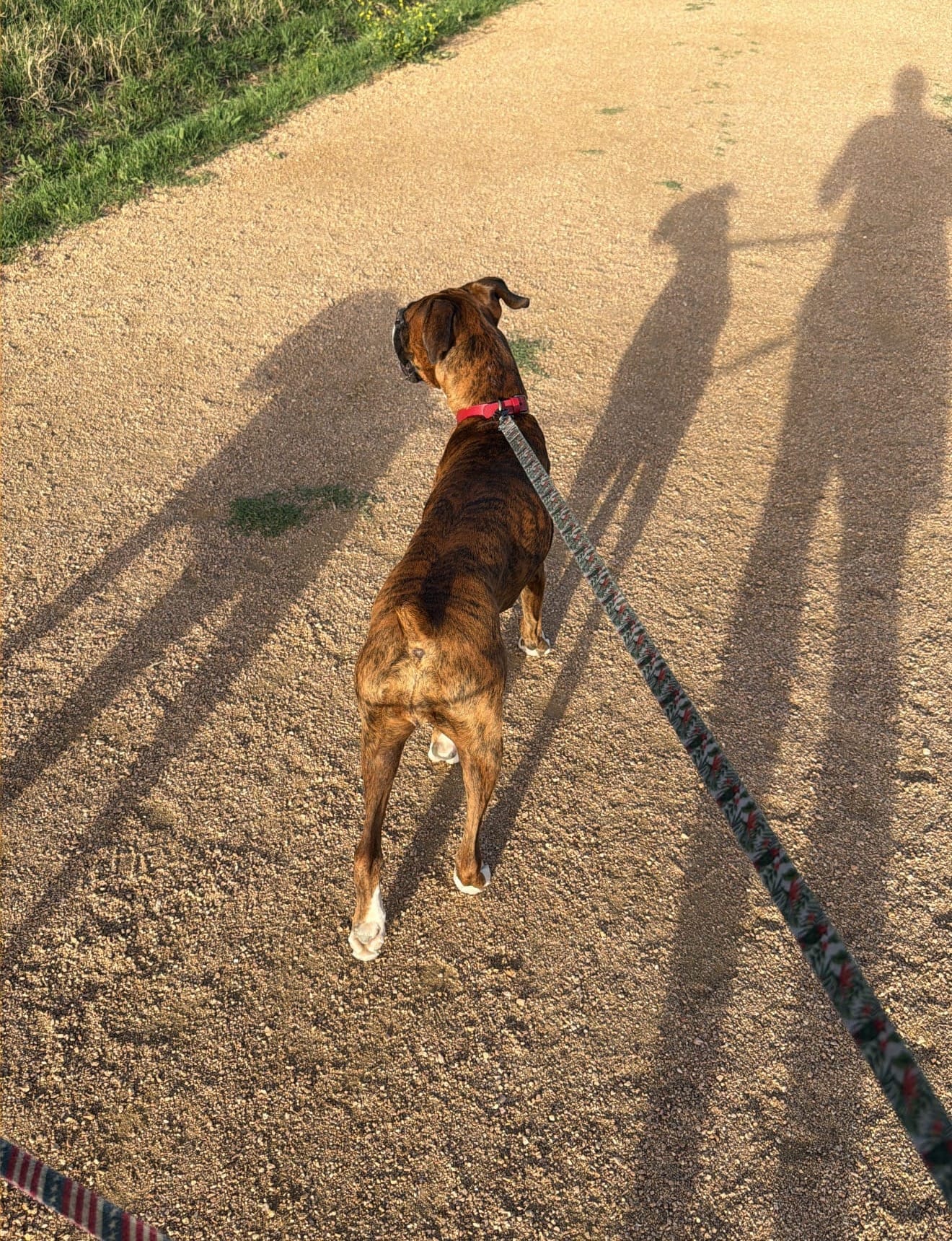
This is the most important part of your morning.
Not a rushed walk.
Not a distracted walk.
A purposeful walk.
Focus on:
- Loose leash movement
- Letting your Boxer sniff
- Occasional stops
- Light engagement with you
Time: 20–30 minutes
🧠 Why this works:
Sniffing lowers arousal.
Structure builds focus.
Movement releases energy without overstimulation.
3. Short Training Session (5 Minutes Max)
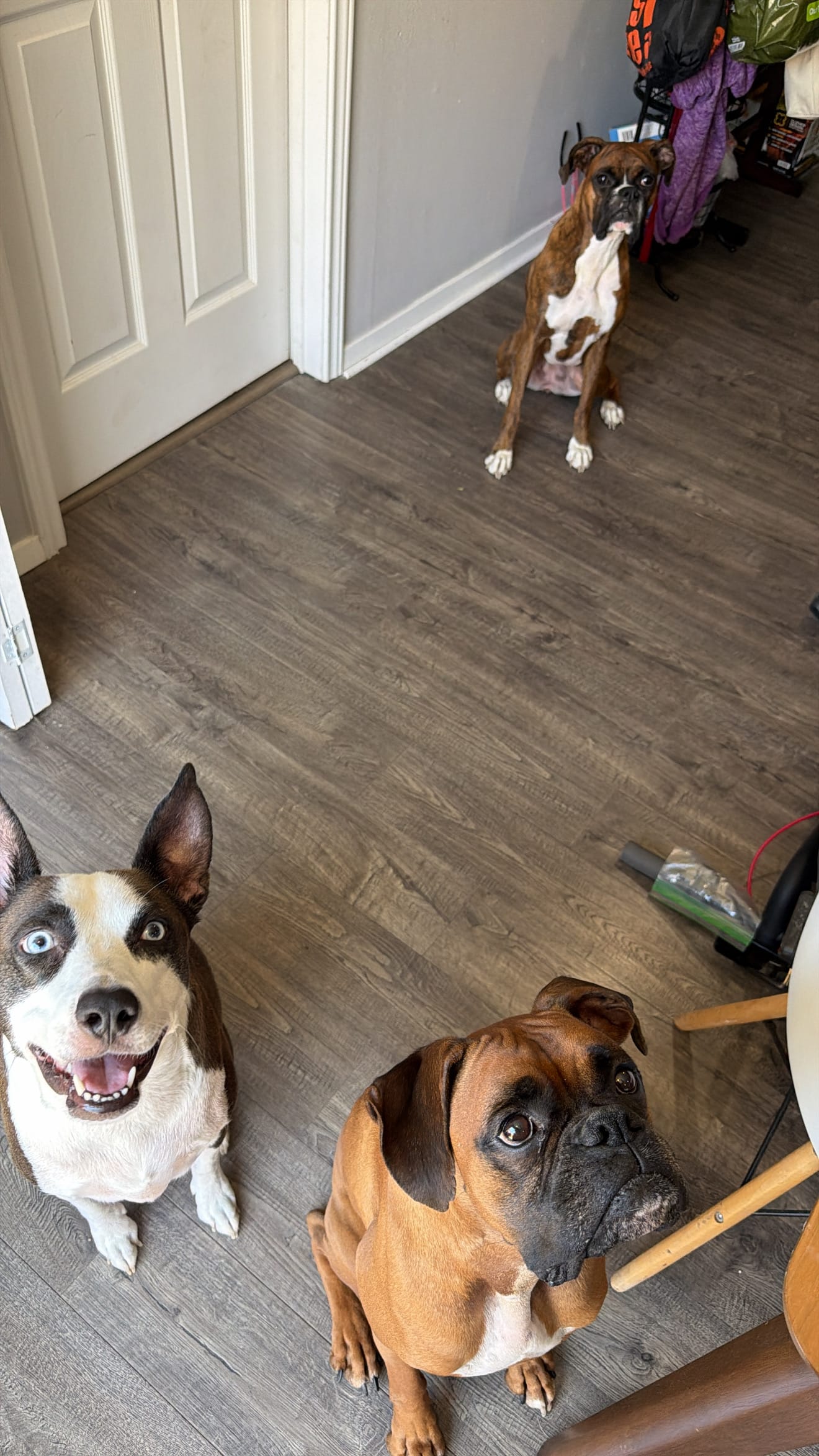
Right after the walk, your Boxer is in the perfect state to learn.
Keep it simple:
- Sit
- Down
- Place
- Recall
- Name recognition
👉 3–5 minutes is enough.
You’re not training commands.
You’re building:
- Focus
- Communication
- Calm thinking
4. Feed With Intention
Don’t just drop food in a bowl and walk away.
Turn feeding into part of the routine:
- Use a puzzle feeder
- Scatter feed
- Ask for calm before eating
- Have them wait patiently before eating
This:
- Slows them down
- Engages their brain
- Prevents frantic behavior
5. The Most Important Step: The “Come Down”
This is where most owners fail.
After movement and activity…
You must teach your Boxer how to come down.
Options:
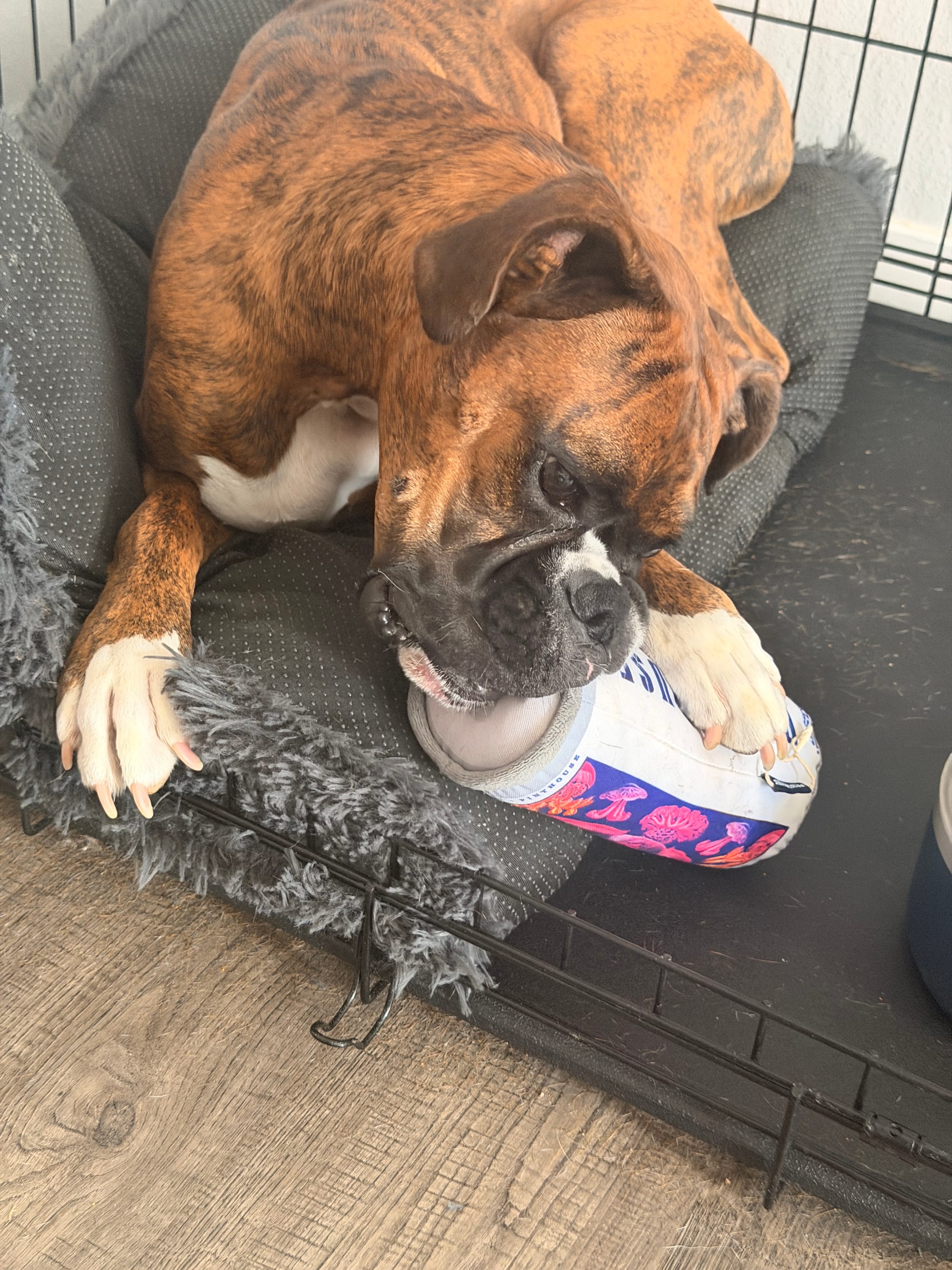
- Dog bed time (place)
- Chew toy
- Lick mat
- Quiet space
Even 10–15 minutes matters.
What Most People Do Instead
Let’s be honest.
Most mornings look like:
- Wake up → chaos
- Quick walk (if that)
- Rush out the door
- Dog left overstimulated
Then we wonder why:
- They can’t settle
- They act out
- They feel “too much”
Real Life: What This Routine Creates
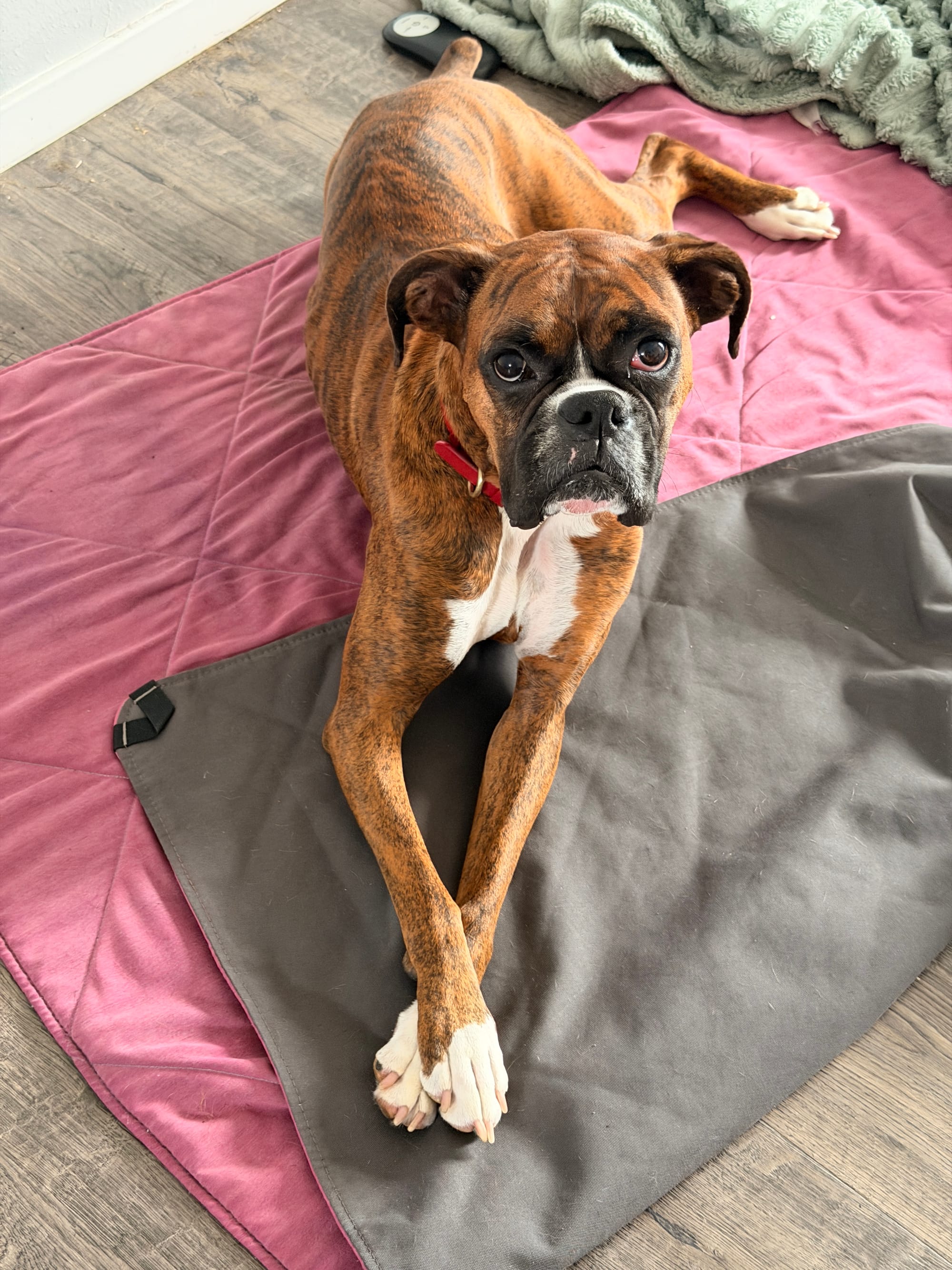
When done consistently, you’ll notice:
- Less jumping
- More listening
- Easier evenings
- A Boxer that can actually relax
Not because they’re tired.
Because they’re regulated.
You Don’t Need More Time—You Need More Structure
This routine doesn’t require:
- 2 hours
- Fancy tools
- Perfect conditions
It requires:
👉 Intentional repetition
Even a simplified version works.
🐾 Free Boxer Resource
Want a simple, repeatable routine you can follow every day?
👉 Download the FREE Boxer Bond Routine Planner
Final Thought
Your Boxer doesn’t need a perfect owner.
They need a predictable one.
Start the day with calm.
Guide their energy.
Build structure.
And you’ll build a dog that fits beautifully into your life.
As always, Happy Bonding! 🧡