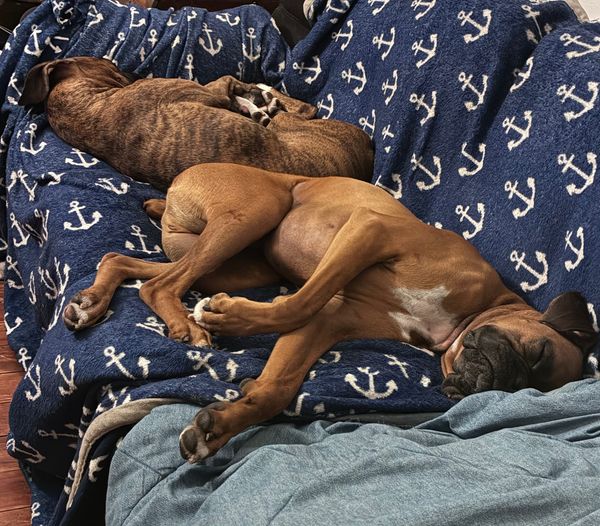
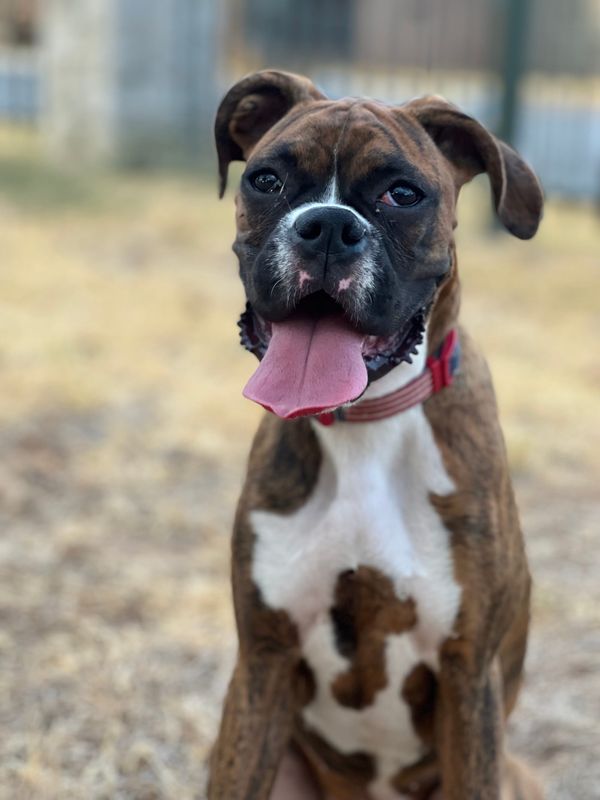
My Boxer Follows Me Everywhere: Normal Boxer Bond or Separation Anxiety?
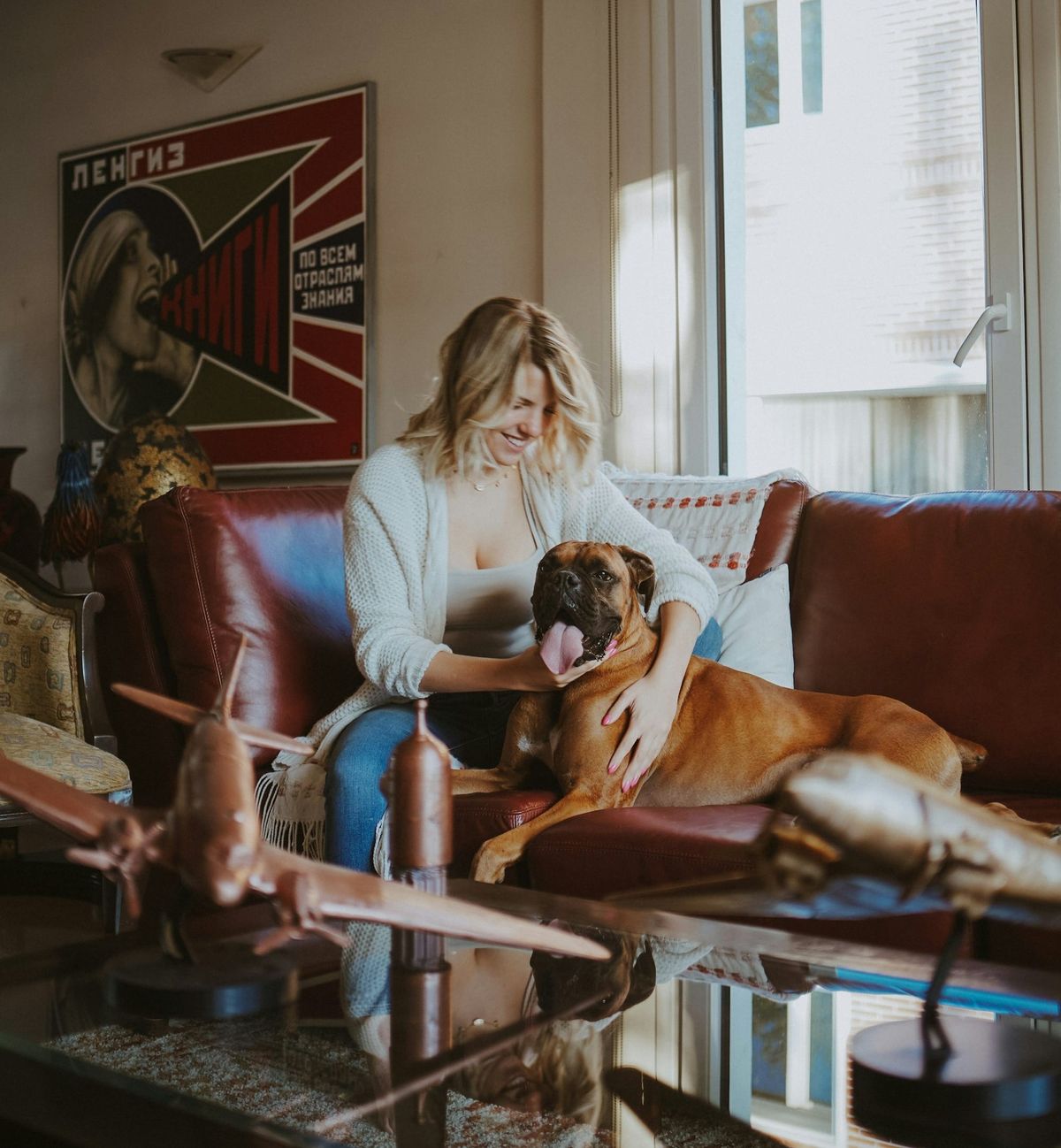
TL;DR: Boxers are famously people-centered dogs, so following you around can be normal. Many Boxers simply love being close to their people. But constant shadowing can become unhealthy if your Boxer cannot relax when separated, panics when you leave, or loses independence. The goal is not to reject your Boxer’s affection. The goal is to build a secure bond where your Boxer can love you deeply and still function calmly on their own.
The Boxer Shadow
If you own a Boxer, you may have noticed something:
You rarely go anywhere alone.
Bathroom? Boxer follows.
Kitchen? Boxer follows.
Bedroom? Boxer follows.
Laundry? Boxer supervises.
Couch? Boxer becomes furniture.
Doorway? Boxer blocks it.
Many Boxer owners joke that their dog is their shadow.
And honestly, that is part of the breed’s charm.
Boxers are deeply connected to their people.
They are affectionate, expressive, loyal, social, and emotionally involved in the household.
They do not usually want to be background dogs.
They want to participate.
But when your Boxer follows you everywhere, there is an important question to ask:
Is this healthy closeness?
Or is this anxious dependence?
There is a difference.
Boxers Are People Dogs
Boxers were built to work closely with humans and live closely with families.
That people-centered nature is one of the reasons the breed is so loved.
A Boxer often wants to be near you because:
- they love you
- they feel secure with you
- they enjoy your attention
- they want to know what you are doing
- they are socially motivated
- they are waiting for the next activity
- they have learned that following you leads to rewards
This is not automatically a problem.
A bonded Boxer may simply prefer your company.
That is beautiful.
The Boxer Bond is real.
But a strong bond should create security, not panic.
When Following Is Normal
Following is usually normal if your Boxer:
- follows you calmly
- can nap when you stop moving
- can relax in another room
- can stay in a crate or on place
- does not panic when you leave
- can eat when you are away
- can settle after you exit
- enjoys closeness but is not frantic
This kind of following may simply mean your Boxer likes being near you.
Many Boxers are naturally involved dogs.
They are curious about household life.
They want to be part of the rhythm.
That does not mean anything is wrong.
When Following Becomes a Problem
Following may be unhealthy if your Boxer:
- panics when separated
- cries, barks, or howls when alone
- destroys doors, crates, blinds, or walls
- cannot settle unless touching you
- refuses food when you leave
- follows you with frantic body language
- blocks exits
- becomes distressed when you close a door
- cannot relax in another room
- gets anxious before you leave
This may point to separation distress or separation anxiety.
If the behavior is intense, dangerous, destructive, or worsening, it is wise to work with a qualified trainer, behavior consultant, and veterinarian.
Separation anxiety is not stubbornness.
It is distress.
And distress needs a thoughtful plan.
Do Not Confuse Love With Insecurity
This is where Boxer owners need nuance.
It is easy to say:
“My Boxer follows me because they love me.”
That may be true.
But love and insecurity can look similar.
A secure Boxer thinks:
“I love my person, but I can relax while they are away.”
An insecure Boxer thinks:
“I cannot function unless my person is right here.”
The goal is not to make your Boxer care less.
The goal is to help your Boxer feel safe even when they are not glued to you.
That is secure attachment.
How Owners Accidentally Create Shadowing
Sometimes owners reinforce constant following without realizing it.
Examples:
- giving attention every time the dog follows
- feeding from the kitchen while cooking
- inviting the dog into every room
- never asking the dog to settle independently
- allowing the dog to interrupt every task
- reacting emotionally every time they whine
- making departures dramatic
- making returns overly exciting
This does not mean you caused every problem.
But routines shape behavior.
If your Boxer learns that following you always leads to attention, food, play, or access, they will keep following.
The Goal: Secure Independence
The goal is not to push your Boxer away.
The goal is secure independence.
Your Boxer should be able to:
- enjoy your company
- relax near you
- relax away from you
- handle short separations
- stay on place
- settle in a crate or room
- remain calm when you move around
- trust that you return
That balance is powerful.
It creates a healthier dog and a more peaceful home.
Step 1: Teach Place
Place training is one of the best tools for Boxers who follow constantly.
Place gives your Boxer a job:
“Relax here while life happens around you.”
Start easy.
Send your Boxer to their bed or cot.
Reward them.
Release them.
Repeat.
Then slowly increase duration.
Practice while you:
- sit on the couch
- cook
- fold laundry
- answer emails
- open the door
- walk around the room
Your Boxer learns they do not need to follow every movement.
They can stay calm and still be included.
Step 2: Practice Tiny Separations
Do not start with leaving for hours.
Start small.
Examples:
- close the bathroom door for 5 seconds
- step into another room and return
- use a baby gate while you cook
- ask for place while you move around
- walk to the mailbox and come back
- leave the room briefly while your Boxer has a chew
Short successful separations build confidence.
The key is returning before panic.
You want your Boxer practicing calm, not distress.
Step 3: Use Calm Independence Activities
Give your Boxer something peaceful to do away from you.
Options:
- lick mat
- stuffed Kong
- chew
- puzzle feeder
- snuffle mat
- frozen treat toy
- calm place time
These activities can help your Boxer associate separation with something positive.
But do not only use them when you are leaving for a long time.
Use them during normal daily routines.
This teaches independence as part of life, not as a scary event.
Step 4: Make Departures Boring
If every departure becomes emotional, your Boxer may become more anxious.
Avoid making a huge event out of leaving.
Stay calm.
Keep your routine predictable.
Do not sneak out in a way that causes panic, but do not turn every exit into a dramatic goodbye either.
Your energy matters.
A calm owner helps create a calmer dog.
Step 5: Do Not Reward Frantic Following
If your Boxer is following calmly, that is one thing.
But if they are frantic, whining, pawing, blocking, or demanding constant attention, be careful not to reward the anxiety loop.
Instead, redirect to a job.
Ask for:
- place
- down
- settle
- crate
- chew time
- calm mat work
Reward calm behavior.
Do not make anxiety the path to attention.
Step 6: Build a Predictable Routine
Boxers thrive with rhythm.
A daily routine can reduce anxious following because your Boxer learns what to expect.
A helpful rhythm includes:
- morning walk
- breakfast
- rest window
- midday potty/enrichment
- afternoon calm time
- evening exercise
- dinner
- decompression
- bedtime
Predictability gives your Boxer a map.
When dogs know what comes next, they often relax more easily.
Step 7: Meet Their Needs First
Sometimes following increases because your Boxer is under-fulfilled.
Before expecting independence, ask:
- Have they had a walk?
- Have they had mental work?
- Have they eaten?
- Have they had potty time?
- Have they had connection?
- Have they had rest?
A Boxer with unmet needs may follow because they are looking for direction.
Meet the need.
Then teach independence.
What Not to Do
Avoid:
- punishing your Boxer for wanting closeness
- yelling at them for following
- locking them away for long periods without training
- forcing separation too quickly
- rewarding panic with constant reassurance
- ignoring true separation anxiety
- assuming all clinginess is cute
- assuming all clinginess is dangerous
The answer is balance.
Love the bond.
Build independence.
When to Get Professional Help
Seek professional help if your Boxer:
- destroys property when alone
- injures themselves trying to escape
- panics in the crate
- screams, howls, or barks for long periods
- cannot eat when alone
- has severe distress when separated
- becomes worse despite gradual training
A good trainer or behavior professional can help you create a safe separation plan.
Your vet may also help rule out health or anxiety-related issues.
Final Thought
A Boxer who follows you everywhere may simply love you deeply.
That is one of the gifts of the breed.
But the strongest bond is not built on panic.
It is built on trust.
Your Boxer should be able to think:
“I love my person, and I am safe even when they step away.”
That is the goal.
Not less love.
More security.
Not less bond.
A healthier bond.
As always,
Happy bonding.
Helpful Products for Building Boxer Independence
- place cot
- crate
- baby gate
- lick mat
- stuffed Kong-style toy
- durable chew
- snuffle mat
- puzzle feeder
- calming dog bed
- treat pouch
These tools can help support independence training, but they work best when paired with a calm, gradual plan.
Related Reading
- How to Strengthen Your Boxer’s Bond Without Creating Anxiety
- How to Teach Your Boxer to Settle
- How to Build a Calm Morning Routine for Your Boxer
- Understanding the Working Boxer
- The Walk: What It Means for You and Your Boxer
Affiliate disclosure: TheBoxerBond may earn from qualifying purchases — at no extra cost to you.
© 2025 · Made with love & care in Austin, Texas · TheBoxerBond