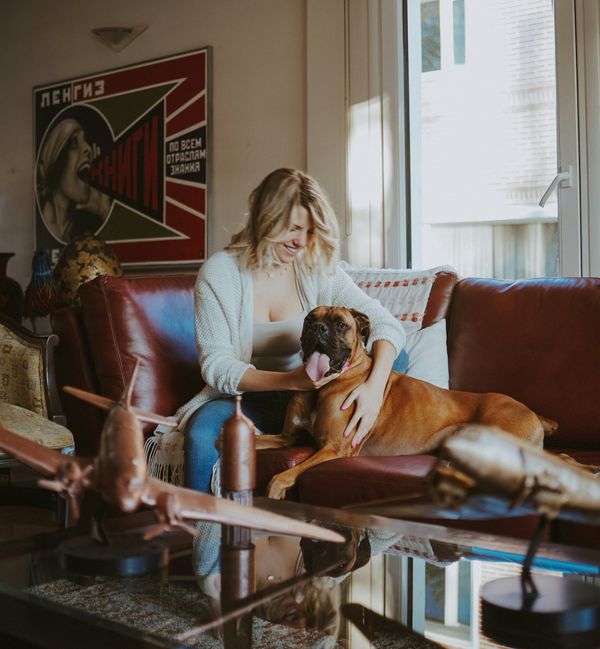
Understanding the Working Boxer: How to Approach Training With the Right Mindset
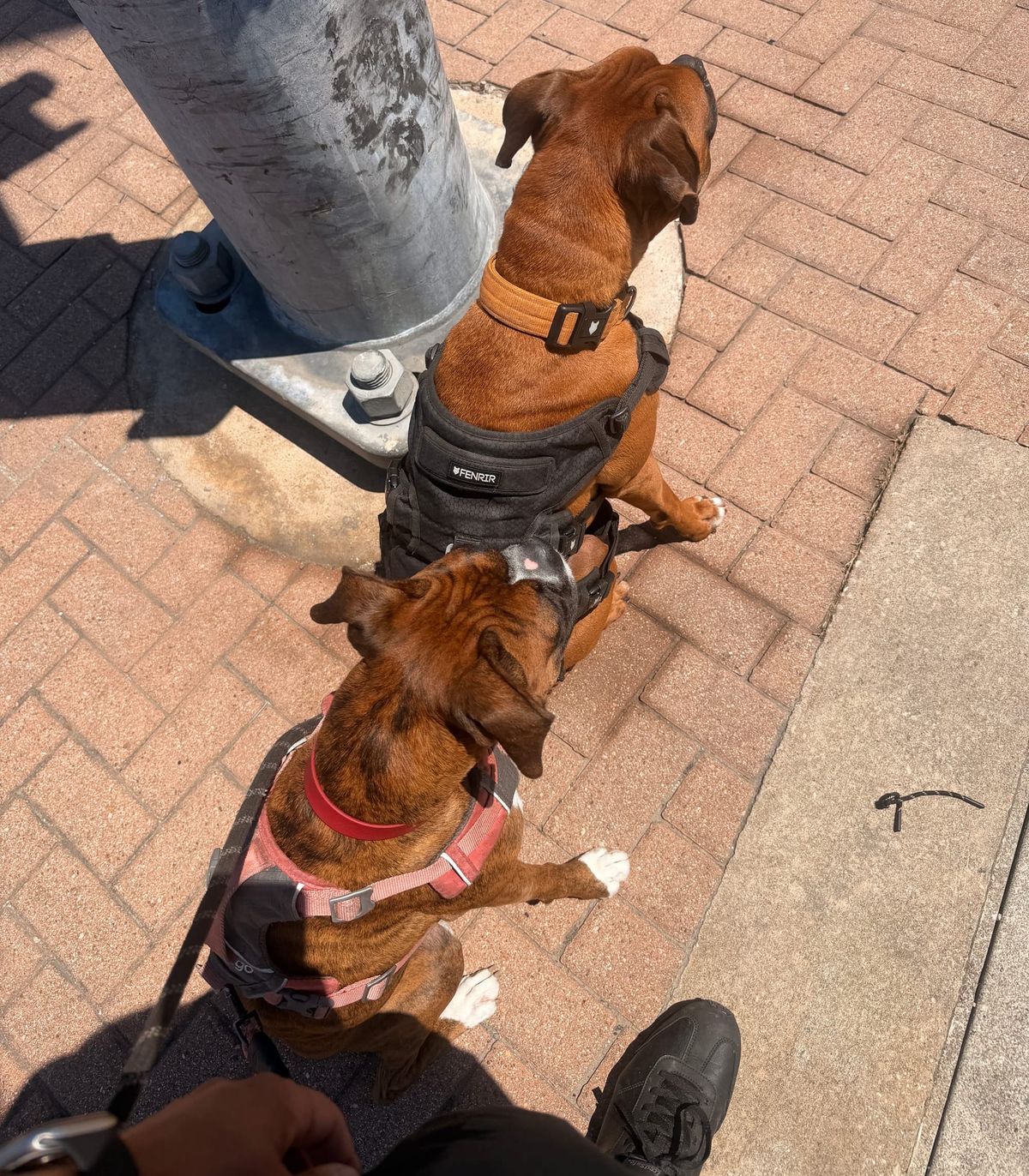
TL;DR: Boxers are not just funny family dogs. They are part of the working dog group, which means they were bred with strength, courage, alertness, intelligence, and human partnership in mind. If you approach Boxer training like you are simply trying to “control” a hyper dog, you will miss the point. The better approach is to understand what the breed was built for, then give your Boxer structure, leadership, purpose, movement, mental work, and a strong bond.
Before You Train a Boxer, You Need to Understand the Boxer
A lot of owners start training from the wrong place.
They ask:
“How do I stop my Boxer from pulling?”
“How do I stop my Boxer from jumping?”
“How do I calm my Boxer down?”
“How do I make my Boxer listen?”
Those are fair questions.
But before you answer them, you need to ask a deeper question:
“What kind of dog am I actually dealing with?”
Because a Boxer is not just a goofy dog with a cute face.
A Boxer is a working breed.
That matters.
It changes how you think about training.
It changes how you think about exercise.
It changes how you think about structure.
It changes how you think about the bond.
If you do not understand the breed, you may accidentally train against the dog instead of with the dog.
And with Boxers, that is where frustration begins.

What Is a Working Dog Breed?
A working dog breed is a dog developed to do a job.
These were not dogs created only to sit on couches, look cute in photos, or casually exist in the background of family life.
Working dogs were bred to help humans.
Depending on the breed, that work may have included:
- guarding
- pulling carts or sleds
- protecting property
- assisting with livestock
- search and rescue
- police or military work
- hunting large game
- carrying supplies
- watching over families
- working closely with handlers
The AKC lists the Boxer in the Working Group, alongside breeds known for strength, intelligence, courage, and usefulness. The AKC also describes Boxers as bright, alert, courageous, and long-loved as family companions. AKC Boxer Breed Information
That is the frame.
A working dog is not just active.
A working dog is wired to participate.
They want something to do.
They want clarity.
They want direction.
They want relationship.
They want purpose.
And if you do not give them a job, many will create one.
With Boxers, that job might become:
- guarding the window
- body-slamming guests
- dragging you on walks
- hunting squirrels
- stealing socks
- barking at hallway noises
- supervising every room in the house
- becoming the self-appointed mayor of chaos
That is not because they are “bad.”
It is because the dog has energy, awareness, emotion, and drive with nowhere productive to go.

What Were Boxers Bred For?
The Boxer’s history helps explain the modern dog in your living room.
The breed traces back to powerful European working and hunting dogs, including the Bullenbeisser, a dog used historically for large game. Over time, the Boxer developed into a versatile working, guarding, and companion breed. The AKC’s breed history describes the Boxer’s transition from hunter’s assistant to the beloved, playful, courageous dog many people know today. Here's some more Boxer history to read.
That history matters because breed purpose does not disappear just because the dog now sleeps on your couch.
Modern Boxers may not be hunting large game or working on farms, but many still carry traits connected to that background:
- strength
- athleticism
- alertness
- courage
- loyalty
- protectiveness
- human focus
- playfulness
- persistence
- physical confidence
This is why Boxers can feel like a lot of dog.
They are not just “hyper.”
They are not just “stubborn.”
They are not just “too much.”
They are a working breed living in a modern home.
That means the owner’s job is to translate old instincts into modern structure.
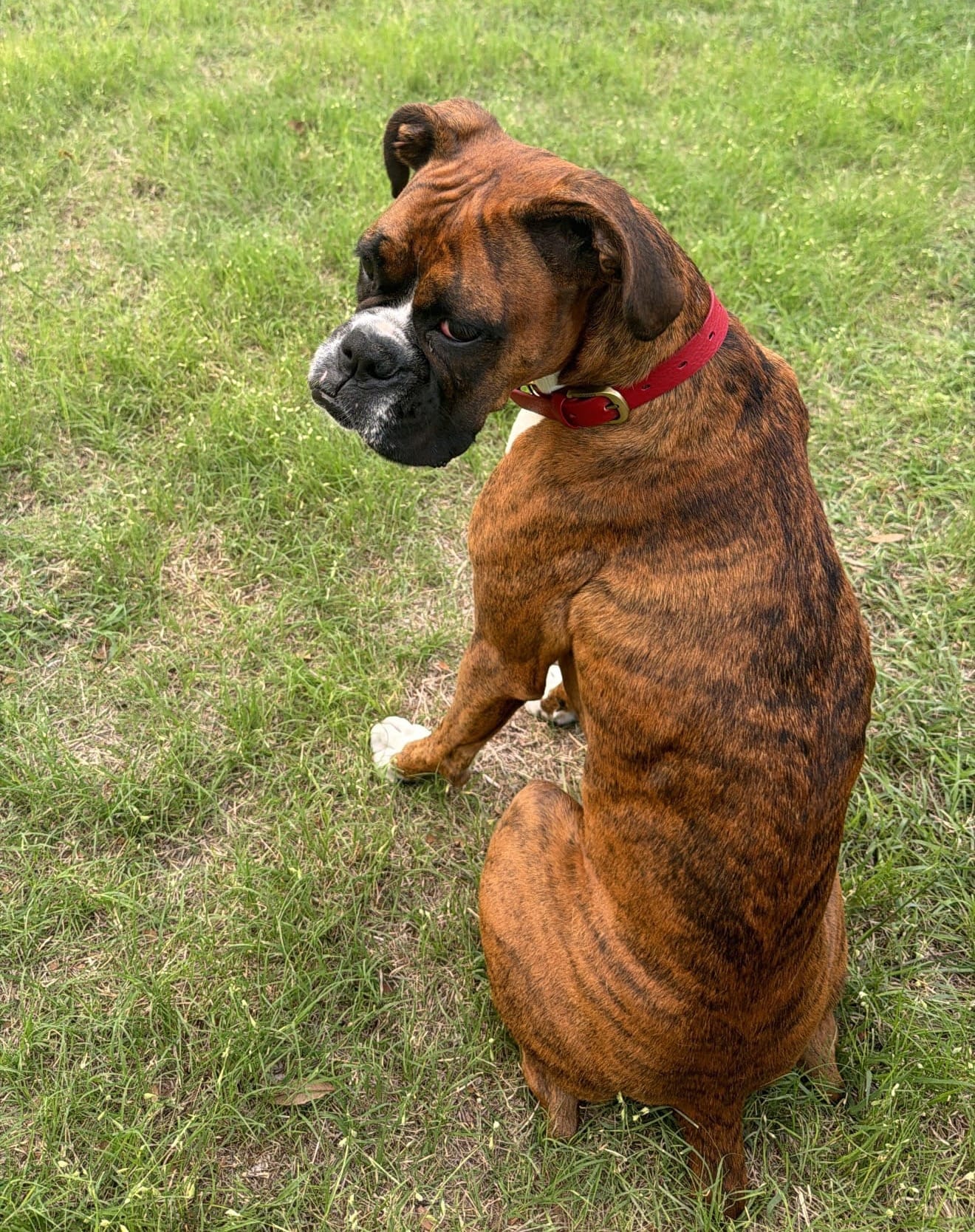
The Boxer Is a Working Dog With a Family Dog Heart
Here is what makes the Boxer special:
They are working dogs, but they are also deeply people-centered.
The AKC describes Boxers as highly intelligent with a strong work ethic and notes that they are ready and willing to work. AKC: Is the Boxer Right for You? Also, you can read our blog post on the same subject here.
But Boxers are not cold, mechanical workers.
They are emotional.
They are silly.
They are expressive.
They are affectionate.
They are sensitive to their people.
That combination is powerful.
A Boxer does not usually want to work away from you.
A Boxer wants to work with you.
That is why training a Boxer cannot be all pressure and obedience drills.
You have to build the relationship.
The bond is not extra.
The bond is the engine.
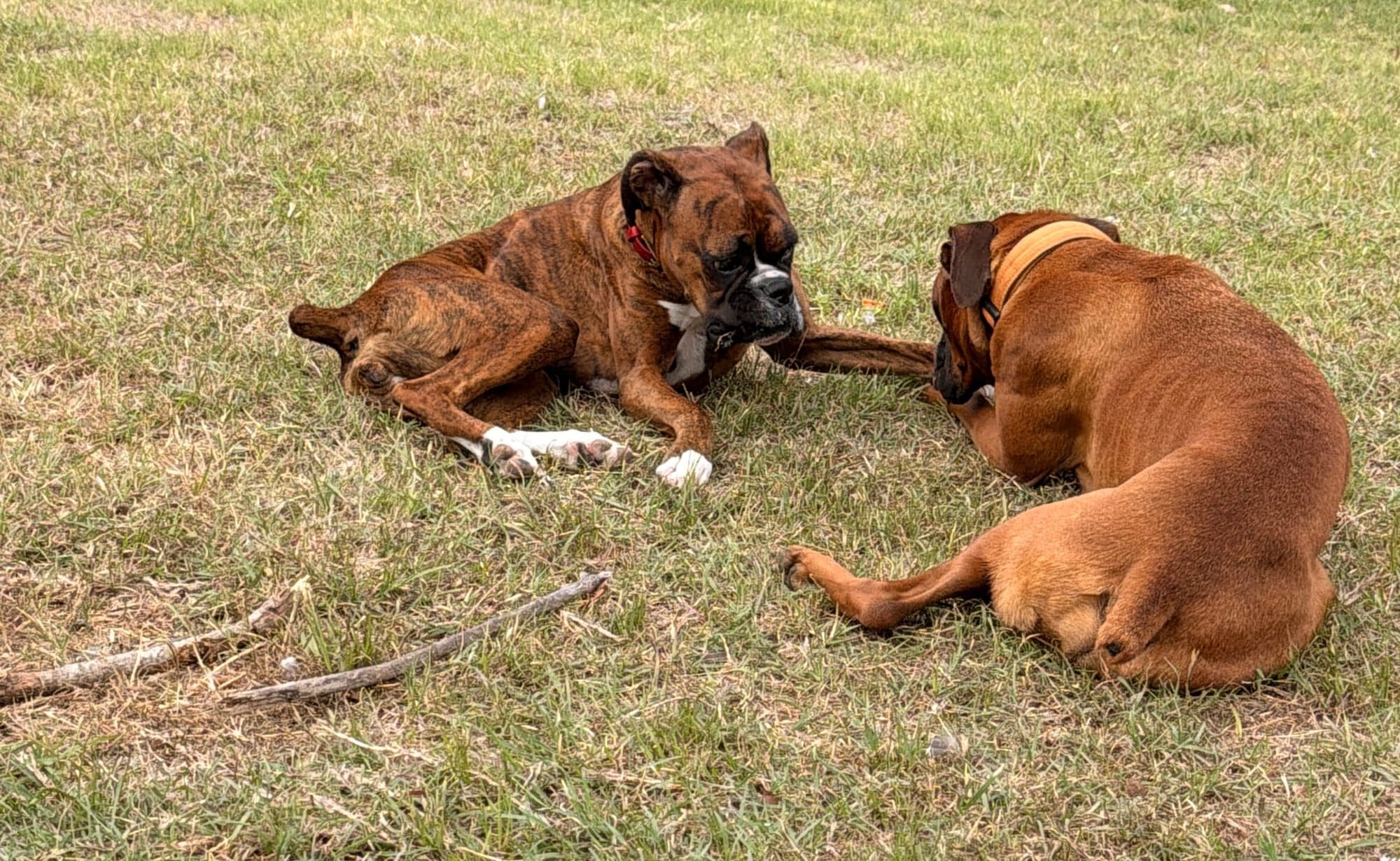
Why This Mindset Matters Before Training
If you see your Boxer as “a crazy dog I need to control,” you will train one way.
You may become frustrated, reactive, harsh, or impatient.
But if you see your Boxer as “a working dog who needs direction,” you will train differently.
You will ask better questions:
- What job does my Boxer need today?
- What energy outlet is missing?
- What structure have I failed to teach?
- What behavior is being accidentally rewarded?
- Is my Boxer confused, under-stimulated, or overstimulated?
- Have I taught calmness, or have I only demanded it?
- Am I giving leadership, or just reacting to chaos?
That mindset changes everything.
Your Boxer is not a problem to dominate.
Your Boxer is a powerful partner to guide.
Training a Boxer Is Not About Crushing the Personality
This is one of the biggest mistakes people make.
They think training means removing the Boxer’s personality.
But the goal is not to create a dull, robotic dog.
The goal is to shape the Boxer’s natural traits into something livable and beautiful.
You do not want to erase:
- playfulness
- confidence
- affection
- alertness
- enthusiasm
- humor
- loyalty
You want to guide those traits.
A well-trained Boxer is still a Boxer.
They still wiggle.
They still make you laugh.
They still have personality.
They still love hard.
But they also understand boundaries.
They know how to settle.
They can walk without dragging you.
They can greet without launching.
They can listen around distractions.
They can recover after excitement.
That is the goal.
Not less Boxer.
A better-developed Boxer.
The Boxer Bond Training Philosophy: Bond-Based Leadership
For Boxers, I believe the best training approach is what I call:
Bond-Based Leadership
That means your training is built on both connection and structure.
Not harshness.
Not permissiveness.
Not constant correction.
Not “let them do whatever because they’re cute.”
Bond-Based Leadership means:
- build trust
- create structure
- reward good choices
- redirect chaos
- teach calmness
- protect the relationship
- give your Boxer purpose
The formula is simple:
Connection first.
Clarity second.
Correction last.
That does not mean you never interrupt bad behavior.
It means you do not lead with pressure when the dog does not understand the job yet.

What Working Boxers Need From Their Owners
A Boxer needs more than love.
Love matters, but love alone does not train a working dog.
Your Boxer also needs:
1. Leadership
Leadership does not mean intimidation.
It means your Boxer can trust you to guide the situation.
Leadership looks like:
- calm energy
- consistent rules
- predictable routines
- clear expectations
- fair consequences
- emotional steadiness
A Boxer should be able to think:
“My person knows what we are doing.”
That feeling creates security.
2. Structure
Working dogs thrive when life has rhythm.
Boxers need to understand:
- when we walk
- when we train
- when we rest
- how we greet people
- how we behave at doors
- how we handle meals
- how we settle indoors
- what earns freedom
- what does not work
Structure does not make a Boxer less happy.
Structure makes the Boxer feel safer.
It gives the dog a map.

3. Purpose
A bored Boxer will find a mission.
So give them one.
Purpose can be simple:
- walk beside me
- check in on leash
- go to place
- wait at the door
- find the treat
- carry the toy
- practice recall
- settle after play
- work for part of your meal
- complete a puzzle
Purpose does not have to be dramatic.
Your Boxer does not need to be a police dog to feel fulfilled.
They need small daily jobs that make life make sense.
4. Movement
Boxers need physical activity.
But exercise should not be mindless chaos.
A Boxer who only runs wild may become more conditioned for wildness.
Movement should include:
- walks
- play
- controlled tug
- recall games
- safe fetch
- conditioning
- structured exercise
- sniff walks
The goal is not just exhaustion.
The goal is fulfillment.
5. Mental Work
A working dog needs the brain engaged.
Mental work can include:
- obedience
- scent games
- food puzzles
- trick training
- leash check-ins
- impulse control
- place training
- problem-solving games
Mental work often tires a Boxer in a different and deeper way than physical exercise alone.
A Boxer who thinks is often easier to live with than a Boxer who only runs.
6. Rest
This is the missing piece.
Many Boxer owners focus on exercise but forget recovery.
A working dog needs an off switch.
Rest must be taught.
That may mean:
- crate time
- place command
- calm chewing
- quiet room time
- post-walk decompression
- structured naps
- no constant entertainment
A Boxer who cannot rest will always seem like they need more.
Sometimes they do not need more stimulation.
They need help coming down.

The Move → Think → Rest Framework
This is one of the most important Boxer ownership frameworks.
Move → Think → Rest
Your Boxer needs all three.
Move
Give the body a healthy outlet.
Examples:
- walking
- playing
- tug
- recall games
- structured exercise
Think
Give the brain a job.
Examples:
- training
- sniffing
- puzzle toys
- impulse control
- obedience games
Rest
Teach recovery.
Examples:
- crate
- place bed
- quiet time
- chew
- nap
- calm decompression
Most Boxer problems get worse when one of these is missing.
Too much movement without thinking can create a better athlete with poor self-control.
Too much freedom without structure can create chaos.
Too much stimulation without rest can create a dog who cannot settle.
Balance is the goal.
How the Working Dog Mindset Changes Training
Once you understand that your Boxer is a working breed, training becomes less random.
You stop asking only:
“How do I stop this?”
And you start asking:
“What should my Boxer do instead?”
That is the real shift.
Instead of “stop jumping”
Teach:
- sit for greetings
- place when guests enter
- four paws on the floor
- calm earns attention
Instead of “stop pulling”
Teach:
- leash check-ins
- loose leash walking
- wait at doors
- sniff breaks as rewards
Instead of “stop barking”
Teach:
- quiet cue
- place command
- calm observation
- disengagement from triggers
Instead of “stop being wild”
Teach:
- Move → Think → Rest
- crate comfort
- settle work
- calm after play
- structured daily rhythm
Training becomes more effective when you replace chaos with a job.
What Training Methods Do Boxers Respond To Best?
Boxers usually respond best to training that is:
- relationship-based
- reward-driven
- structured
- fair
- engaging
- consistent
- calm
- clear
They often do well with:
- positive reinforcement
- marker words like “yes”
- food rewards
- play rewards
- praise
- short sessions
- real-life rewards
- clear routines
They often do poorly with:
- harsh intimidation
- constant yelling
- boring repetition
- unclear rules
- emotional frustration
- all freedom and no structure
Boxers are sensitive inside strong bodies.
That is important.
They may look tough, but many respond deeply to tone, pressure, frustration, and inconsistency.
The best training should make your Boxer think:
“I understand what you want, and I want to work with you.”
That is the sweet spot.
You Must Become the Leader Before the Boxer Can Follow
This is where the philosophical part becomes practical.
Your Boxer cannot follow leadership you do not provide.
If your energy is chaotic, the dog feels it.
If your rules change every day, the dog learns loopholes.
If you only train when you are frustrated, the dog associates training with tension.
If you reward chaos without realizing it, the dog repeats chaos.
Leadership begins with the owner.
That means asking:
- Am I consistent?
- Am I calm?
- Am I clear?
- Am I patient?
- Am I rewarding what I want?
- Am I preventing what I do not want?
- Am I giving my Boxer enough purpose?
- Am I teaching rest, not just activity?
A better Boxer often begins with a better human system.
That is not criticism.
That is empowerment.
Because once you change the system, the dog can change too.

Before You Get a Boxer, Ask Yourself This
If you are thinking about getting a Boxer, ask yourself:
- Do I want an involved dog?
- Can I provide daily structure?
- Am I willing to train consistently?
- Can I handle a playful, powerful dog?
- Do I want a dog that needs connection?
- Can I provide exercise and mental stimulation?
- Am I willing to teach calmness?
- Do I want a working dog personality in a family companion package?
If yes, a Boxer may be an incredible fit.
If not, it is better to be honest now.
The right breed match matters.
Boxers are not difficult because they are bad.
They become difficult when their needs do not match the home.
Final Thought: Train the Breed You Have
A Boxer is not just a funny face.
A Boxer is a working dog with heart.
They are strong, silly, loyal, watchful, emotional, athletic, and deeply connected to their people.
Training a Boxer well begins with respect for what they are.
Not fear.
Not dominance.
Not permissiveness.
Respect.
Respect the history.
Respect the energy.
Respect the intelligence.
Respect the bond.
Respect the need for structure.
Respect the need for purpose.
When you understand the working dog inside your Boxer, your training changes.
You stop trying to control chaos.
You start building partnership.
And that is where the real Boxer Bond begins.
Helpful Training Tools for Working-Minded Boxers
The right tools can support structure, but they do not replace leadership.
Related Reading
- Complete Boxer Training & Exercise Guide
- The Best Training Style for Adult Boxers
- Are You Overcorrecting Your Boxer Puppy?
- Boxer Bloodlines Explained
Affiliate disclosure: TheBoxerBond may earn from qualifying purchases — at no extra cost to you.