The Walk: What It Means for You and Your Boxer
TL;DR: For a Boxer, the walk is more than a potty break. It is exercise, leadership, training, bonding, mental stimulation, confidence building, and emotional regulation all in one. A good walk teaches your Boxer how to move through the world calmly with you. The goal is not just to “wear them out.” The goal is to build a Boxer who can walk, think, listen, sniff, settle, and trust your guidance.
The Walk Is Bigger Than Exercise
Most people think walking a dog is simple.
Clip the leash.
Go outside.
Let the dog potty.
Come back home.
But with a Boxer, the walk means so much more.
A walk is where your Boxer learns:
- how to follow your leadership
- how to handle the outside world
- how to use their body without losing their mind
- how to check in with you
- how to calm down around distractions
- how to explore without dragging you
- how to bond through shared movement
For Boxers especially, the walk is one of the most important daily rituals you can build.
Because Boxers are not low-energy background dogs.
They are athletic.
They are emotional.
They are curious.
They are powerful.
They are people-focused.
They are often protective.
They are easily excited by the world around them.
That means the walk can either become one of your greatest training tools…
or one of your biggest daily battles.
The difference is structure.

Why Walking Matters So Much for Boxers
Boxers are working dogs at heart.
They were not created to lay around all day with nothing to do. Even when they live in apartments, condos, or smaller homes, they still need movement, engagement, and daily structure.
A Boxer who does not get enough quality walking may become:
- restless
- destructive
- jumpy
- mouthy
- anxious
- reactive
- demanding
- bored
- hard to settle
But here is the part people miss:
A walk is not only about burning energy.
A wild 45-minute walk where your Boxer pulls, scans, reacts, and drags you down the street may physically tire them out, but it may also mentally rehearse chaos.
A good walk should help your Boxer become more balanced.
That means the walk should include:
- movement
- sniffing
- structure
- training
- calmness
- connection
- recovery
This is where the Boxer Bond framework comes in:
Move → Think → Rest
The walk should help your Boxer move their body, use their brain, and come back home ready to settle.
The Walk Starts Before You Leave the Door
One of the biggest mistakes owners make is thinking the walk starts once they are outside.
It does not.
The walk starts the moment your Boxer realizes the leash is coming out.
If your Boxer is already spinning, jumping, barking, grabbing the leash, or losing control before you leave, you are starting the walk from a place of chaos.
For many Boxers, the first training moment is not on the sidewalk.
It is at the door.
Before leaving, ask for calm.
That might look like:
- waiting while you grab the leash
- sitting or standing calmly before clipping it on
- not charging through the door
- waiting for a release cue
- walking out with you instead of launching ahead
This teaches your Boxer:
“The walk begins with calm leadership, not chaos.”
That one shift can change everything.
The Leash Is Communication, Not a Steering Wheel
A leash is not just a rope attached to your dog.
It is a communication line.
If your Boxer feels constant tension on the leash, they may learn to pull harder, brace against pressure, or become more frustrated.
A good leash walk should feel like a conversation.
You are communicating:
- slow down
- come with me
- check in
- pause here
- ignore that
- keep moving
- relax
- you are safe
Your Boxer is also communicating:
- I smell something
- I am excited
- I am nervous
- I see another dog
- I need space
- I want to explore
- I am overstimulated
A better walk begins when you stop thinking:
“How do I control my Boxer?”
And start thinking:
“How do I communicate clearly with my Boxer?”
That is the difference between dragging each other and walking together.
What a Good Boxer Walk Should Include
A great Boxer walk is not one thing.
It is usually a mix of different walking styles.
The best walks include a balance of:
- structure
- sniffing
- training
- decompression
- fitness
- calm exposure
Let’s break those down.
1. The Structured Walk
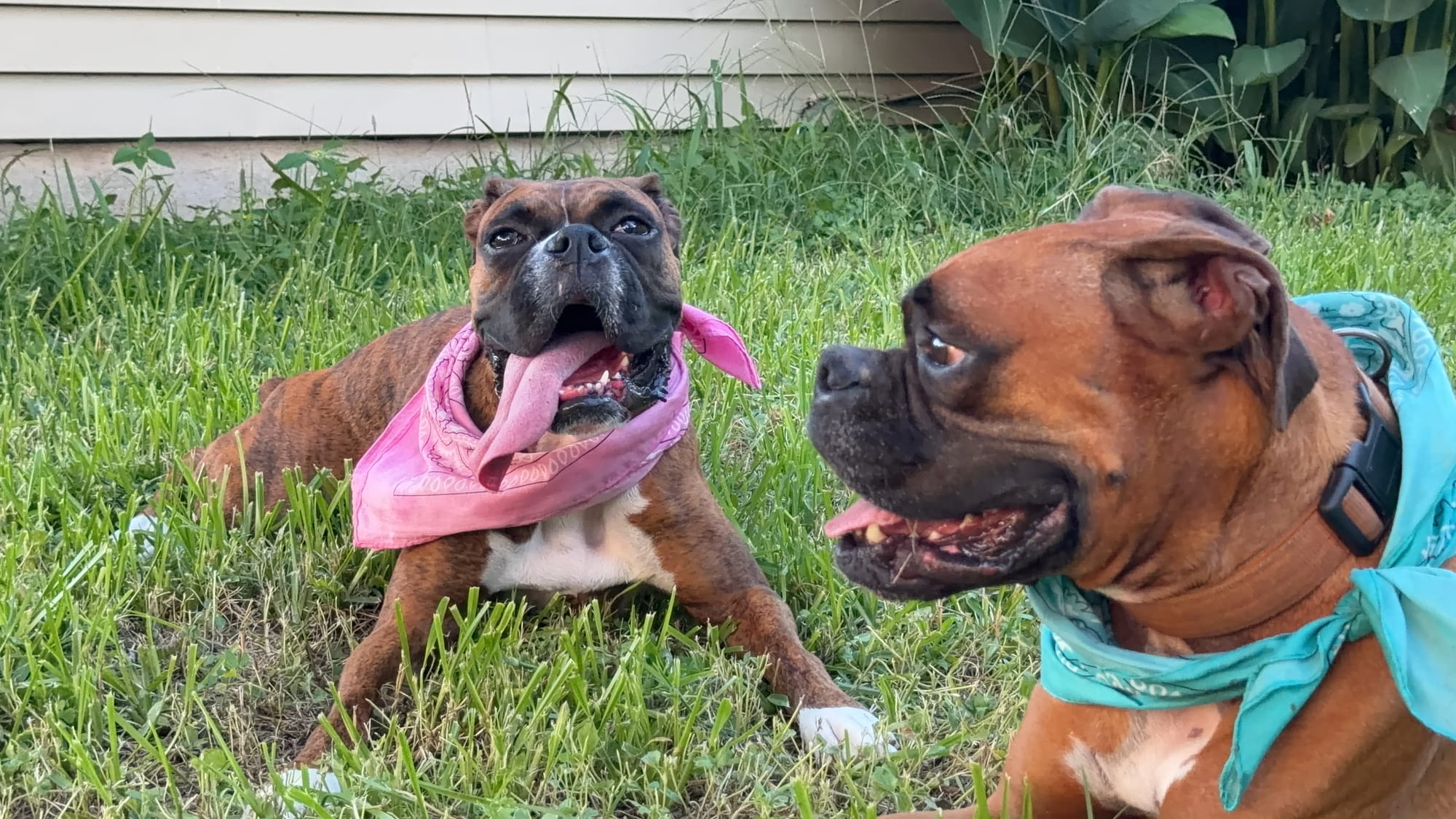
A structured walk teaches your Boxer to move with you.
This does not mean your Boxer has to heel perfectly the entire time.
It means they understand that pulling, lunging, zig-zagging, and dragging you forward does not run the walk.
A structured walk may include:
- loose leash walking
- check-ins
- sitting at curbs
- waiting at doors
- changing direction
- walking past distractions
- calm body language
- no pulling toward every smell, person, or dog
This type of walk builds leadership.
Your Boxer learns:
“My person guides the walk.”
Not in a harsh way.
In a clear way.
This is important because Boxers are strong dogs. If they learn that pulling gets them what they want, walks can become exhausting fast.
2. The Sniff Walk
Sniffing matters.
A lot.
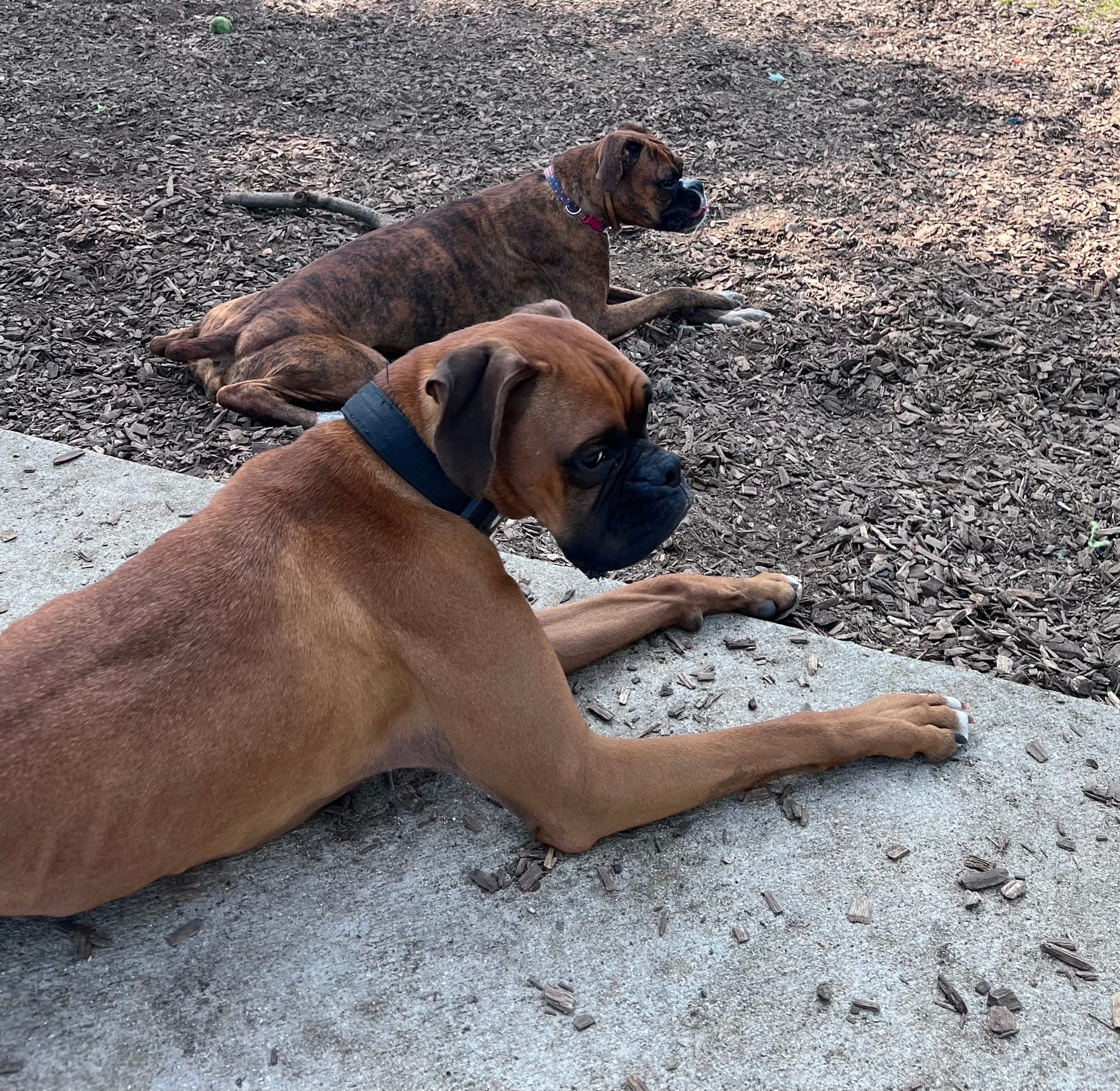
Dogs experience the world heavily through scent. For Boxers, sniffing can be mentally satisfying and calming when used correctly.
A sniff walk allows your Boxer to explore at a slower pace.
This can help with:
- mental stimulation
- decompression
- confidence
- relaxation
- reducing boredom
- giving the brain a job
A sniff walk does not mean your Boxer drags you wherever they want.
It means you intentionally give them permission to explore.
Use a cue like:
“Go sniff.”
Then let them investigate a safe area.
When it is time to move on, use another cue like:
“Let’s go.”
This gives your Boxer both freedom and structure.
That is the sweet spot.
3. The Training Walk
A training walk turns the outside world into a classroom.
You can practice:
- name response
- recall on a long line
- loose leash walking
- sit
- down
- heel position
- place on benches or platforms
- eye contact
- leave it
- wait
- calm around distractions
For Boxers, this is powerful because they need mental work.
A Boxer who only walks without thinking may still come home wired.
But a Boxer who has to move, listen, check in, and make choices often comes home more fulfilled.
Keep training short and fun.
You do not need a 30-minute obedience drill.
You need small wins throughout the walk.
Example:
- mark it with “yes”
- reward
- keep moving
Boxer looks at you
That tiny moment teaches:
“Checking in with my person matters.”
Over time, that changes the whole walk.
4. The Decompression Walk
A decompression walk is slower, calmer, and less demanding.
This is especially helpful for Boxers who are:
- anxious
- reactive
- overstimulated
- recovering from a busy week
- living in apartments
- easily triggered by dogs or people
- in need of mental relief
A decompression walk usually happens in a quieter place.
Think:
- open field
- quiet trail
- empty park
- low-traffic neighborhood
- long line in a safe area
The goal is not perfect obedience.
The goal is to let your Boxer breathe, sniff, explore, and relax without constant pressure.
For some Boxers, these walks are life-changing.
5. The Fitness Walk
Boxers need physical conditioning too.
A fitness walk is more purposeful and active.
This might include:
- brisk walking
- gentle hills
- controlled pace changes
- light jogging if appropriate
- longer steady movement
- conditioning work
But be careful.
Boxers are not built to be pushed hard in extreme heat, high humidity, or unsafe conditions.
Fitness walks should match your Boxer’s:
- age
- health
- conditioning
- weight
- temperature tolerance
- breathing comfort
- joint health
If your Boxer is older, overweight, recovering from injury, or has a known health condition, talk to your vet about safe exercise levels.

How Much Walking Does a Boxer Need?
There is no perfect number because every Boxer is different.
Age, health, temperament, weather, fitness level, and lifestyle all matter.
But many healthy adult Boxers do best with daily walks plus additional training, play, or enrichment.
A practical starting point for many adult Boxers is:
- one solid morning walk
- one shorter midday potty walk
- one evening walk
- indoor enrichment or training during the day
For apartment Boxers, multiple walks per day are especially important because walks replace the yard.
But remember:
More walking is not always better if the walk is chaotic.
Quality matters.
A calm 25-minute walk with structure and sniffing may do more good than a frantic hour of pulling and reacting.

Walking Boxer Puppies
Puppies need walks, but they also need protection.
A Boxer puppy is still developing physically and emotionally.
For puppies, walks should be short, positive, and confidence-building.
Focus on:
- safe exposure
- leash introduction
- potty routines
- calm observation
- name recognition
- gentle check-ins
- building trust
Do not force long-distance walks too early.
Do not turn every outing into intense exercise.
A puppy walk is less about mileage and more about teaching:
“The world is safe, and my person guides me through it.”

Walking Adult Boxers
Adult Boxers usually need more structure.
By age 3 to 5, many Boxers are strong, opinionated, and fully aware of what they can get away with.
If pulling has worked for years, they will keep pulling.
If barking at dogs has been rehearsed for years, they may keep doing it.
If rushing through doors has always been allowed, they will expect that too.
Adult Boxer walks are often about habit replacement.
You are teaching:
“This is how we walk now.”
That requires:
- consistency
- patience
- clear rewards
- fewer chances to rehearse bad habits
- calm leadership
- better routines
Adult Boxers can absolutely improve.
But you have to be more consistent than the old habit.
Walking Senior Boxers
Senior Boxers still need walks.
They just may need a different kind of walk.
For seniors, the walk may become less about distance and more about:
- mobility
- sniffing
- routine
- confidence
- light conditioning
- mental stimulation
- bonding
- quality of life
Senior walks may be:
- shorter
- slower
- more frequent
- softer on joints
- focused on sniffing
- adjusted for heat or cold
Do not assume an older Boxer is “done.”
A senior Boxer still benefits from seeing the world, smelling new smells, and moving their body.
Just respect their limits.
The Best Walking Style for Boxers
The best walking style for Boxers is a blend of:
structure + sniffing + engagement + calm leadership
Not strict marching.
Not total freedom.
Not constant correction.
Not chaotic pulling.
The goal is a walk where your Boxer understands:
- when to walk with you
- when they can sniff
- when to ignore distractions
- when to check in
- when to calm down
- when to move on
That kind of walk builds a better dog.
And honestly, it builds a better owner too.

What If Your Boxer Pulls?
Pulling is one of the most common Boxer walking problems.
Boxers pull because:
- they are excited
- they are strong
- they want to reach smells
- they want to greet people or dogs
- they have learned pulling works
- they are overstimulated
- the walk starts with too much energy
The fix is not just buying a new tool.
The fix is changing the pattern.
Start with:
- calm before the leash goes on
- calm before exiting the door
- reward check-ins
- stop moving when pulling starts
- change direction before they drag you
- reward walking near you
- practice in low-distraction areas
- use sniff breaks as rewards
Your Boxer needs to learn:
“Pulling does not move us forward. Walking with my person does.”
That lesson takes repetition.

What If Your Boxer Reacts to Other Dogs?
Some Boxers get very intense around other dogs on walks.
They may bark, lunge, stare, whine, pull, or become hard to redirect.
This does not always mean aggression.
Sometimes it is:
- frustration
- excitement
- fear
- poor social skills
- over-arousal
- lack of distance
- too much leash tension
- too many bad rehearsals
The biggest mistake is waiting until your Boxer explodes and then trying to correct the explosion.
Work earlier.
Create distance.
Reward calm noticing.
Teach your Boxer to look at the trigger and then look back at you.
You want your Boxer to learn:
“I can see the world without losing control.”
If your Boxer is showing serious aggression, intense fear, or safety concerns, work with a qualified trainer or veterinary behavior professional.
Should Your Boxer Meet Dogs on Leash?
Usually, I would be careful with this.
On-leash greetings can be awkward because the leash limits natural movement.
Many dogs feel trapped or frustrated.
For Boxers, who can be intense and physical, leash greetings can quickly become too much.
A better goal is neutrality.
That means your Boxer learns:
“I do not have to greet every dog I see.”
This is huge.
A well-trained Boxer does not need to meet everyone.
They need to move through the world calmly.
That is real freedom.
The Walk Is a Bonding Ritual
One of the most beautiful things about walking your Boxer is that it builds relationship.
You and your Boxer are moving through the world together.
You are sharing direction, pace, attention, and experience.
Every walk is a chance to say:
“I see you. I’ve got you. Follow me.”
That matters deeply for Boxers because they are so people-connected.
When the walk is done well, your Boxer learns that you are:
- safe
- fun
- clear
- consistent
- worth following
This is not just obedience.
This is trust.
A Simple Boxer Walk Formula
Here is a simple structure you can use.
First 5 Minutes: Calm Start
- wait at the door
- start slow
- reward check-ins
- do not allow immediate pulling
Next 10–20 Minutes: Movement + Sniffing
- structured walking
- sniff breaks
- direction changes
- calm exposure
- short training moments
Final 5 Minutes: Slow Down
- reduce intensity
- calmer pace
- final potty chance
- relaxed return home
After the Walk: Rest
- water (may have to wait if they're panting)
- calm place
- crate or bed
- chew or lick mat if needed
- quiet recovery
This helps your Boxer understand the rhythm:
Move → Think → Rest
That rhythm is one of the best things you can teach a Boxer.
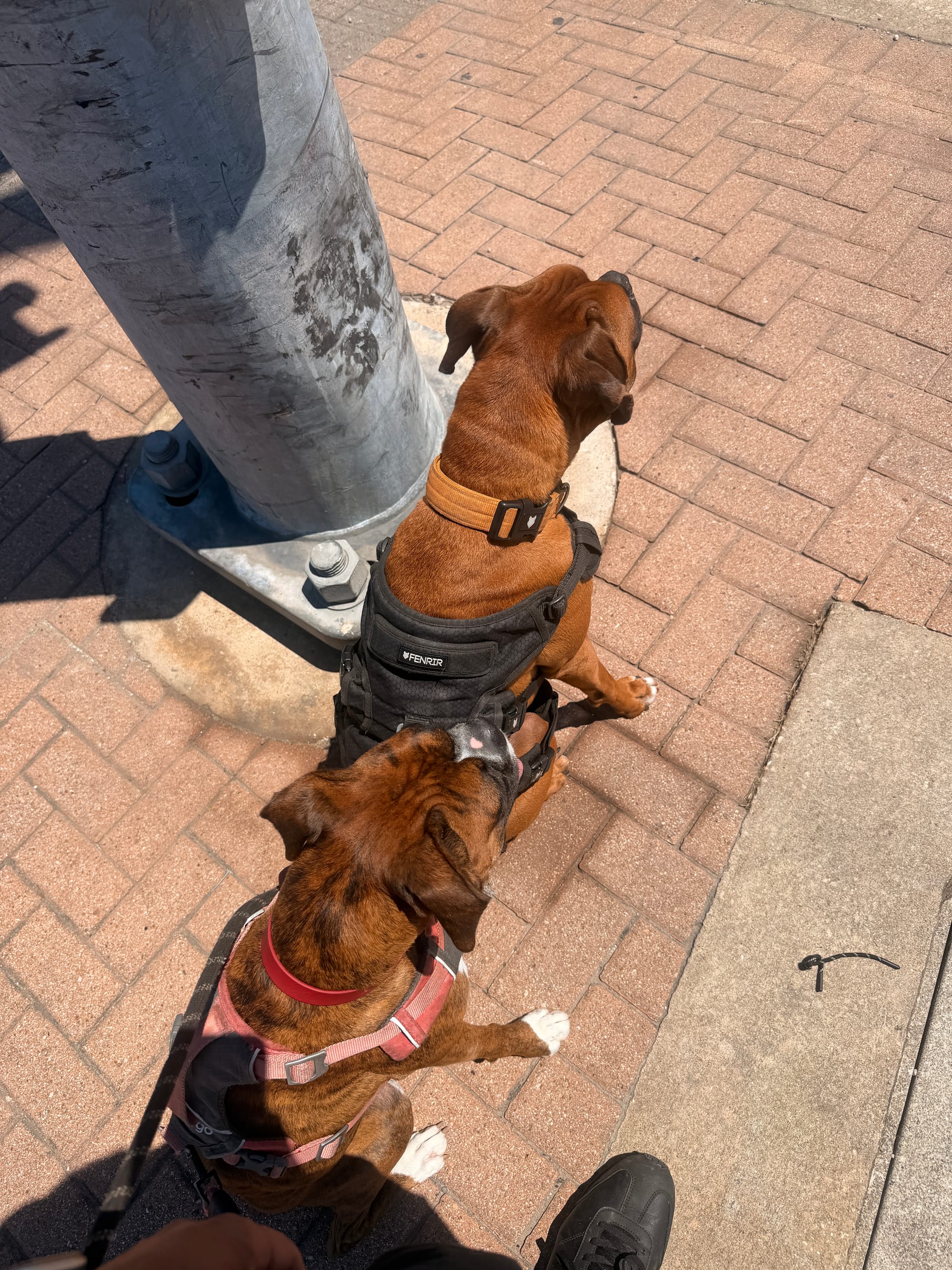
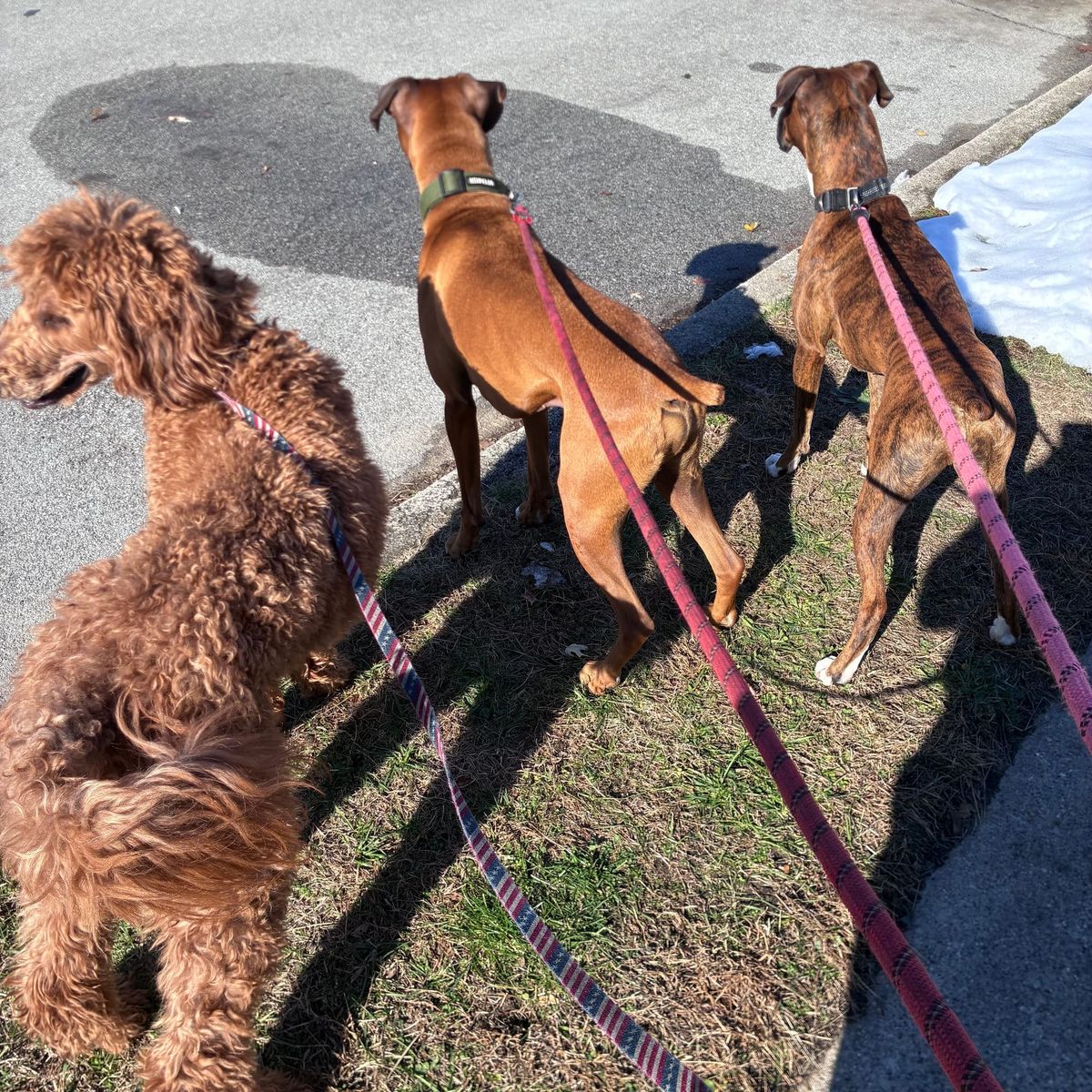
Walking Two Boxers at Once
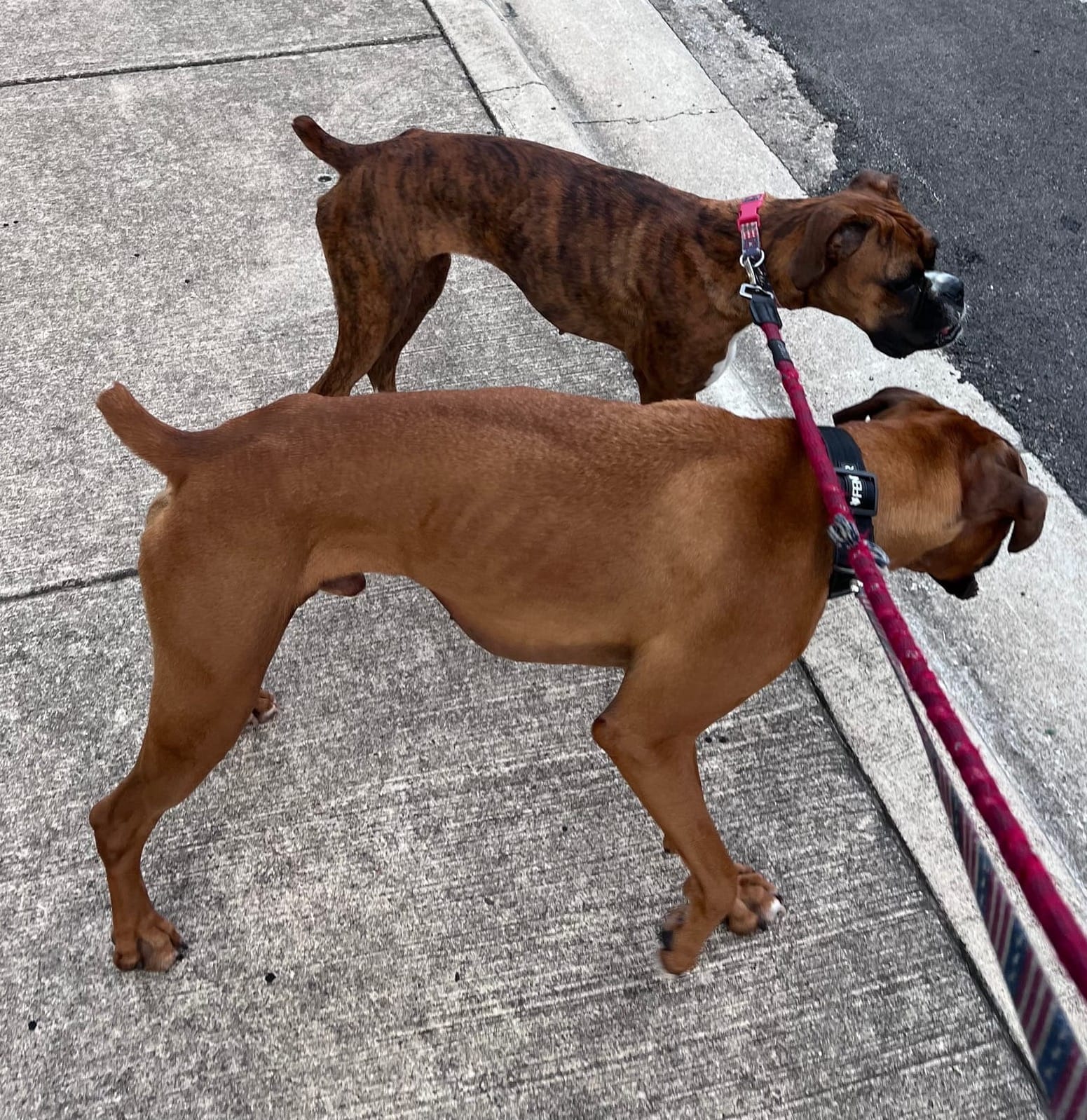
If you have two Boxers, walking can be beautiful — or chaotic.
Two Boxers can feed off each other’s energy.
One pulls, the other pulls.
One reacts, the other reacts.
One gets excited, the other joins the party.
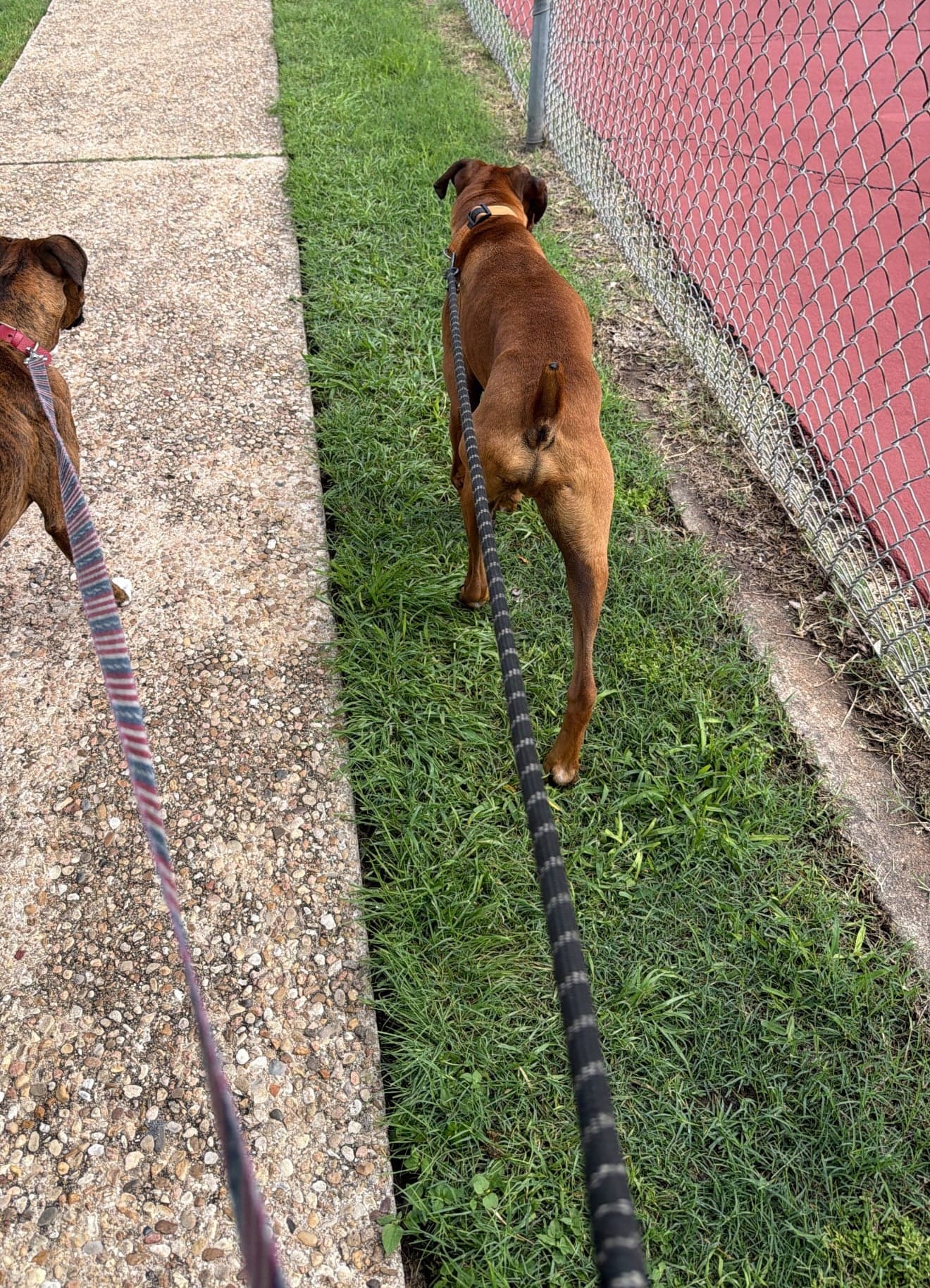
If your two Boxers are hard to walk together, go back to basics. We are currently doing just this.
Train separately first.
Each dog should understand:
- leash pressure
- check-ins
- waiting at doors
- walking near you
- ignoring distractions
- calming down after excitement
Then bring them together once each dog has better individual skills.
Walking two Boxers is not just twice the dog.
It can be twice the momentum.
So build the foundation one dog at a time if needed.
Apartment Boxers Need Walks Even More
If you live in an apartment with a Boxer, the walk is not optional.
It becomes part of your dog’s daily environment.
Your Boxer may not have a yard, so walks become their:
- bathroom
- exercise
- enrichment
- sniff time
- training space
- exposure to the world
- emotional reset
Apartment Boxers can absolutely thrive.
But they need a routine.
A strong apartment Boxer routine might include:
- morning walk
- quick midday potty break
- indoor enrichment
- evening walk
- training games
- structured rest
The secret is not having a huge house.
The secret is having a consistent rhythm.
Walking in Hot Weather
Boxers need extra care in heat.
Do not treat summer walks the same as spring or fall walks.
In hot weather:
- walk early
- walk late
- avoid peak sun
- check pavement
- carry water
- choose shade
- shorten the walk
- watch breathing and recovery
If the pavement is too hot for your hand, it is too hot for their paws.
If your Boxer is panting heavily, slowing down, drooling excessively, or seeking shade, take it seriously.
Summer walks should be smart, not intense.
Walking Gear That Helps
The right gear does not replace training, but it can make training easier.
Helpful walking tools may include:
- a sturdy 6-foot leash
- well-fitted harness
- flat collar with ID
- treat pouch
- high-value training treats
- poop bags
- collapsible water bowl
- dog water bottle
- long line for safe recall practice
- reflective gear for night walks
- cooling gear for hot weather
Helpful Boxer Walking Essentials
- sturdy 6-foot leash
- no-pull harness
- treat pouch
- training treats
- poop bags
- collapsible water bowl
- dog water bottle
- long line
- reflective leash or collar
- cooling mat for post-walk rest
These tools support better walks, but the real magic is consistency.
The Biggest Walking Mistake Boxer Owners Make
The biggest mistake is thinking:
“I just need to tire my Boxer out.”
That mindset can create a dog with more stamina but not more calmness.
A better goal is:
“I need to fulfill my Boxer.”
That means the walk should satisfy the body, brain, and relationship.
A fulfilled Boxer is not just exhausted.
A fulfilled Boxer is calmer, more connected, and easier to live with.
Final Thought: The Walk Is the Relationship in Motion
Your walk with your Boxer is not just a daily task.
It is your relationship in motion.
It shows your Boxer:
- how you lead
- how you communicate
- how you handle the world
- how you respond to excitement
- how you create safety
- how you build trust
A Boxer does not need a perfect owner.
They need a present one.
They need someone who understands that the walk is not only about distance.
It is about connection.
It is about rhythm.
It is about learning how to move through life together.
And when you get the walk right, everything else gets easier.
Because a Boxer who walks well with you starts to live better with you too.
As always, Happy Bonding y'all! 🧡
Related Reading
- Complete Boxer Training & Exercise Guide
- Leash Reactivity: Causes & Fix Plan
- Hot Weather Safety for Boxers
- Are Boxers Good Apartment Dogs? Yes — With a Simple Routine
- How to Strengthen Your Boxer’s Bond Without Creating Anxiety
Affiliate disclosure: TheBoxerBond may earn from qualifying purchases — at no extra cost to you.