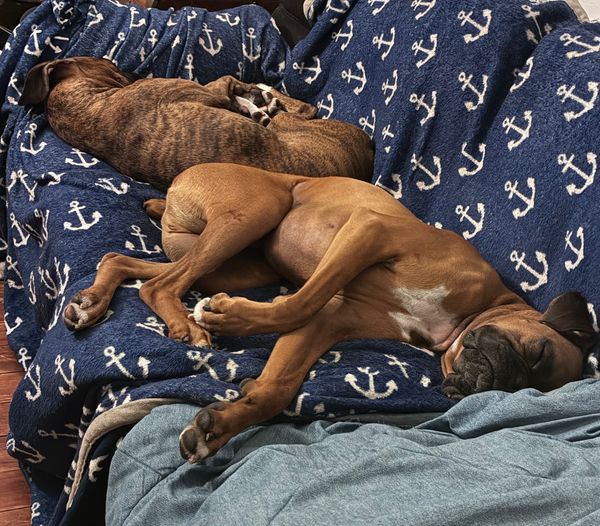
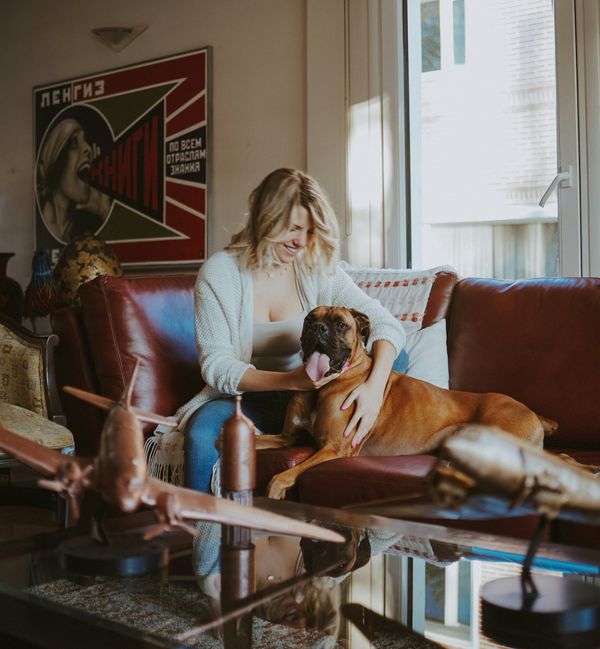
Having Two Boxers: Double the Wiggle Butts, Double the Bond

TL;DR: Having two Boxers can be one of the most rewarding experiences for the right owner. The companionship, playfulness, security, and bond can feel incredible — but a second Boxer should not be used as a shortcut for training, exercise, or attention. If your first Boxer is well-trained, socialized, and well-mannered, adding a second can sometimes feel easier than expected. But if your first Boxer is already chaotic, reactive, or under-trained, a second dog may multiply the problems instead of solving them.
The Dream of Having Two Boxers
There is something special about having two Boxers.
One Boxer already brings a home to life.
Two Boxers?
That is double the wiggle butts, double the comedy, double the play, double the presence, and double the bond.
For me, one of the things I love most about having two dogs is the sense of security. There is something powerful about walking with one Boxer on each side of me. It feels steady. It feels balanced. It feels like we are moving as a unit.
I also love watching the playfulness they have with each other.
My two are a year apart, and seeing them interact has been one of the best parts of owning multiple dogs. They entertain each other, play with each other, and clearly enjoy each other’s company — but they still enjoy playing with me too.
That part matters.
A second Boxer should add to the relationship, not replace your role in it.

Is Having Two Boxers Harder?
Here is the honest answer:
It can be harder.
But in my experience, it has actually felt easier in many ways.
Now, I want to be careful with that statement because every home, every dog, and every owner is different.
For me, having two Boxers has not felt like twice the work.
The biggest increase has been cost.
Food costs more.
Vet care costs more.
Preventative care costs more.
Supplies cost more.
That part is real.
But the daily work itself?
It has not felt dramatically harder.
Part of that is because I already had gear from my first Boxer. I had already been through the puppy stage, the routines, the training, the learning curve, and the daily structure of raising a Boxer.
My first Boxer was also my first dog ever.
By the time I considered getting a second Boxer, I had raised him until about two years old. I had built confidence. I had experience. I had learned what worked. I had already developed routines.
That foundation made a huge difference.
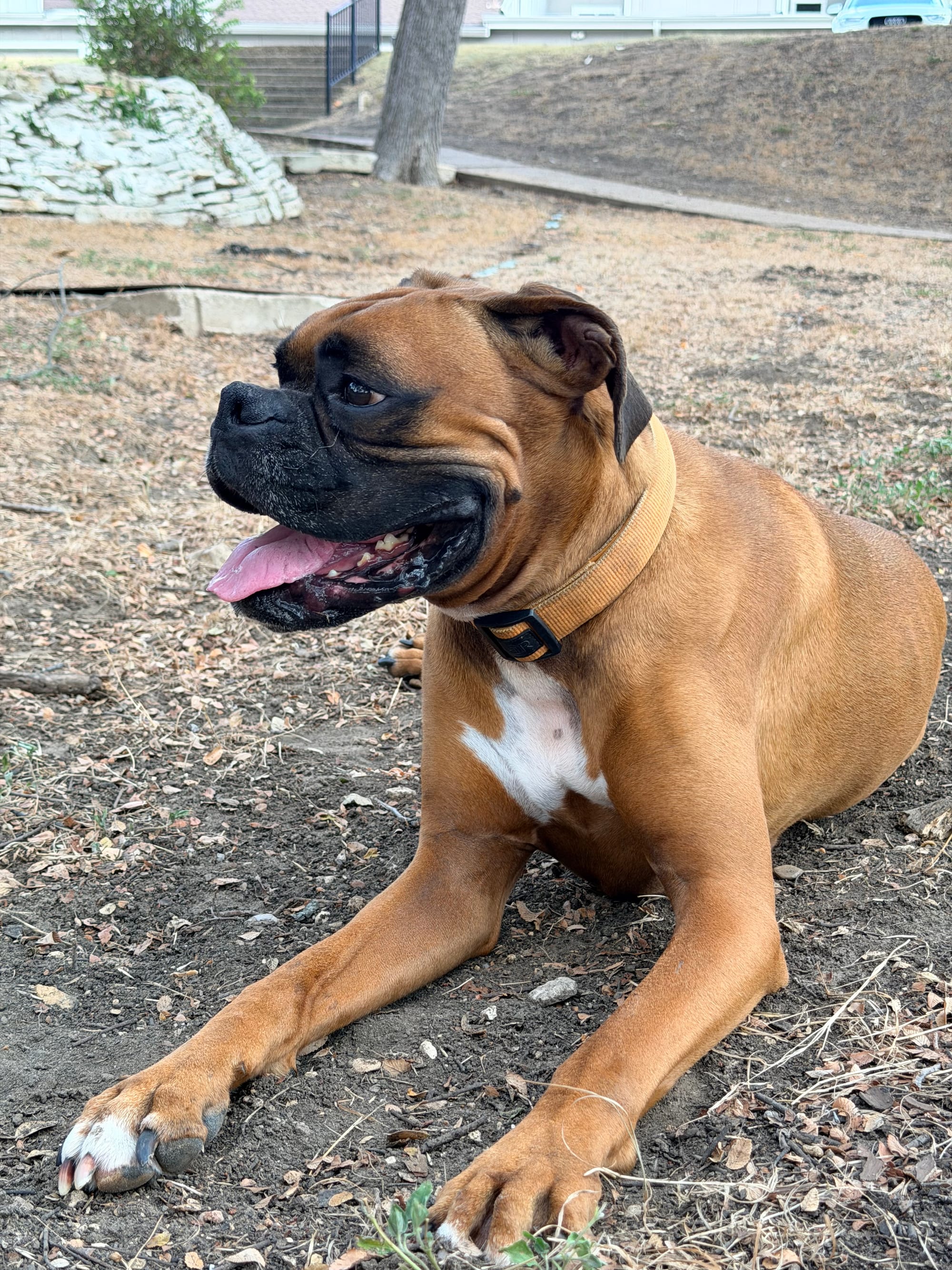
Confidence Matters Before Getting a Second Dog
One of the biggest reasons I felt ready for a second Boxer was because I felt confident with my first.
I had put in the work.
I had trained him.
I had socialized him.
I had built routines.
I had learned how to communicate with him.
I had learned how to lead him.
And honestly, the compliments helped too.
When people compliment your dog multiple times a day — how well-mannered they are, how good they look, how well they walk, how calm or controlled they seem — it builds confidence.
It makes you feel like:
“Okay, I am doing something right.”
That confidence matters.
Not because you need to be perfect before getting a second dog.
But because adding another Boxer is not the time to be unsure about your first dog’s foundation.
If your first Boxer is still out of control, still dragging you down the street, still reacting to everything, still ignoring you, still jumping on guests, still struggling with the basics, adding another dog may not make life easier.
It may make the problems louder.
The First Boxer Sets the Tone
This is one of the most important lessons I have learned:
Your first Boxer sets the tone for the second.
If your first Boxer is calm, trained, socialized, and well-mannered, the second Boxer has a better example to follow.
That does not mean the second dog trains itself.
That does not mean you can skip structure.
That does not mean the second dog will magically become perfect.
But dogs do learn from the environment they live in.
If the home already has routines, boundaries, and calm leadership, the second dog is entering a system that already works.
That is why it felt smoother for me.
My second Boxer did not come into chaos.
She came into a home where there was already structure.
There was already a dog who understood the rhythm.
There was already experience behind the decisions.
That makes a difference.

The Big Mistake: Getting a Second Boxer Just to “Fix” the First One
A lot of people want a second dog because they think it will solve problems with the first dog.
They think:
“My Boxer is bored. I’ll get another dog.”
“My Boxer has too much energy. A second dog will tire them out.”
“My Boxer is lonely. Another dog will fix that.”
“My Boxer needs a playmate so I don’t have to entertain them as much.”
I understand that thinking.
Part of my own initial reasoning for getting a second Boxer was that I liked the idea of my first dog having a companion and playmate.
But that cannot be the only reason.
A second Boxer should not be a substitute for:
- training
- walking
- leadership
- structure
- enrichment
- socialization
- your attention
- your relationship with the first dog
If your first Boxer is under-trained, a second Boxer will not automatically fix that.
If anything, they may copy each other.
One dog barking at the window can become two dogs barking at the window.
One dog pulling on the leash can become two dogs pulling.
One dog jumping on guests can become a full-contact greeting committee.
One dog with poor manners can become a household culture.
That is why the second dog decision has to be made carefully.

A Second Boxer Should Add to the Home — Not Rescue It
This is the mindset shift:
Do not get a second Boxer to rescue your first Boxer from boredom, loneliness, or lack of structure.
Get a second Boxer because your home is ready to lead, train, afford, and care for two dogs.
That is different.
A second Boxer can absolutely bring more joy, play, companionship, and balance to the home.
But they should be joining a stable system.
Not being asked to fix a broken one.
Before getting a second Boxer, ask yourself:
- Is my first Boxer well-trained?
- Can I walk my first Boxer calmly?
- Does my first Boxer respond to me around distractions?
- Is my first Boxer socialized and generally well-mannered?
- Can my first Boxer share space peacefully?
- Do I have the budget for two dogs?
- Do I have time to train the second dog individually?
- Am I ready to manage two dogs if they do not instantly get along?
These questions are not meant to scare you.
They are meant to protect the bond.
Getting Lucky Matters Too
I also want to be honest about this:
I got lucky.
My two Boxers enjoy each other.
They get along well.
They play well.
They like being around each other.
They have only had maybe one or two disagreements, and those were over a bone.
Other than that, they genuinely enjoy each other’s company.
That is a blessing.
But it is not something every owner should assume will happen automatically.
Some dogs do not click immediately.
Some need careful introductions.
Some have resource guarding issues.
Some have same-sex tension.
Some have different energy levels.
Some older dogs do not want a puppy constantly in their face.
Some dogs need more space than expected.
So yes, having two Boxers can be beautiful.
But the relationship between them still needs to be managed, especially in the beginning.

Watch High-Value Items
In my home, the only real disagreements have been over a bone.
That is common.
High-value items can create tension between dogs.
That includes:
- bones
- chews
- food bowls
- stuffed Kongs
- special toys
- treats
- favorite resting spots
- owner attention
Even dogs who love each other can argue over valuable resources.
This does not mean they hate each other.
It means you need to manage the environment.
A smart two-dog household may feed separately, give bones separately, supervise chew time, and avoid leaving high-value items around if they create tension.
Peace between dogs is not just about whether they like each other.
It is also about whether the owner manages the things that can cause conflict.
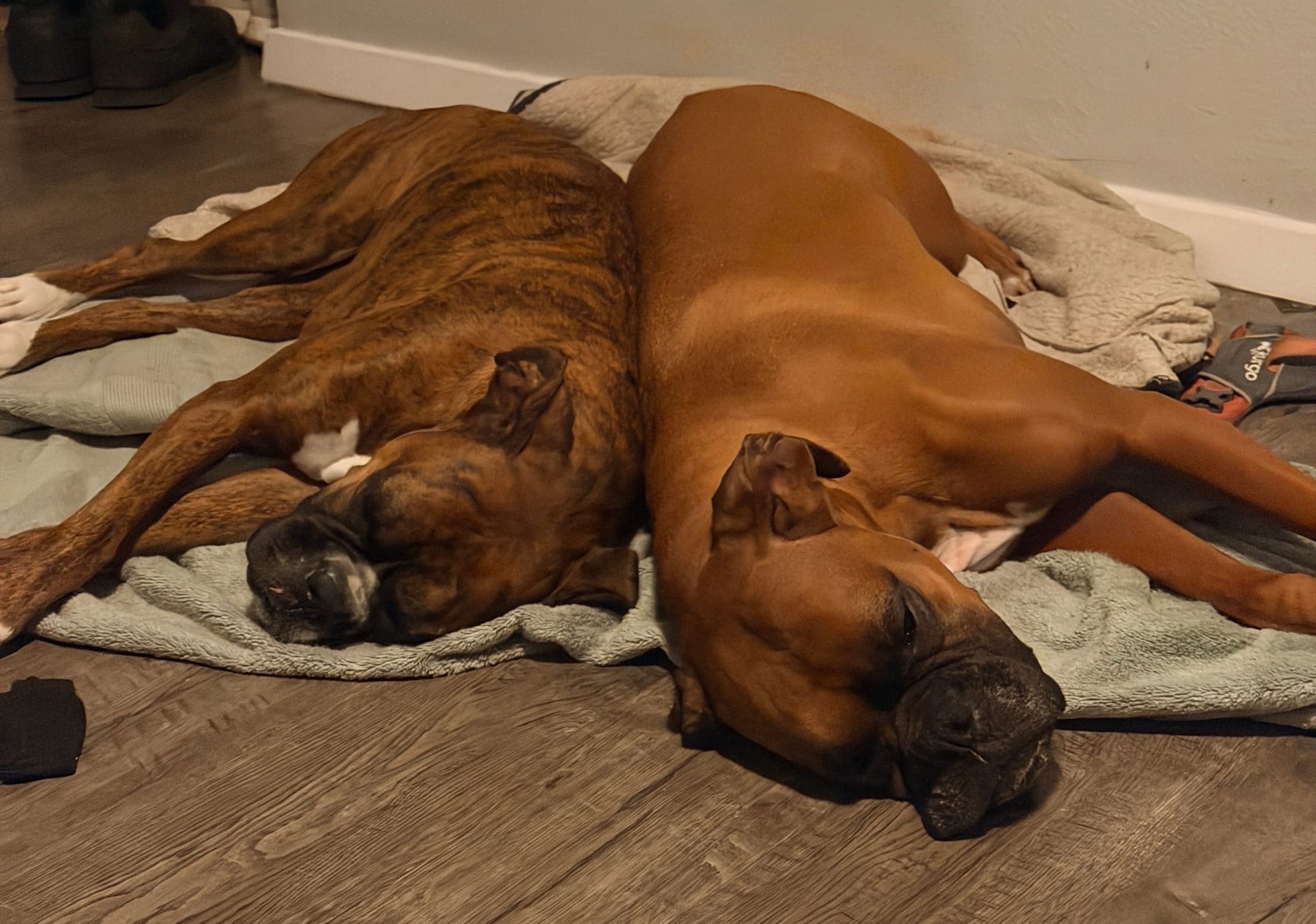
Male and Female Balance
Another reason I liked the idea of having two Boxers was wanting a male and female household.
For me, that felt balanced.
Every dog is an individual, and sex alone does not guarantee harmony, but many owners do think carefully about whether to add a male or female dog depending on their first dog’s temperament, confidence, energy, and social style.
The important point is not simply “male plus female is always best.”
The important point is:
Think about fit.
Think about:
- temperament
- age gap
- energy level
- confidence level
- training needs
- household space
- resource management
- your first dog’s personality
A second Boxer should be chosen with intention, not impulse.

The Second Boxer Still Needs Their Own Training
This is where many owners fall short.
They get a second dog and assume the first dog will train them.
That is not fair to either dog.
Yes, the second Boxer may learn from the first.
Yes, the second Boxer may fall into the household rhythm faster.
Yes, a well-trained first dog can make the transition easier.
But your second Boxer still needs:
- individual walks
- individual training
- individual bonding
- individual confidence building
- individual recall practice
- individual leash work
- individual manners
If you only train them as a pair, you may create dogs who cannot function separately.
That can become a problem.
Each dog should know:
“I have my own relationship with my owner.”
That is critical.
The bond should not only exist between the two dogs.
It should exist between you and each dog individually.
Two Dogs Can Entertain Each Other — But You Are Still the Leader
One of the best things about having two Boxers is that they can entertain each other.
They can play.
They can wrestle.
They can chase.
They can nap near each other.
They can keep each other company.
That is beautiful.
But they still need you.
They still need your leadership.
They still need your structure.
They still need your attention.
They still need your training.
They still need your daily rhythm.
A second dog should not make you disappear from the equation.
It should make the home feel richer.
Your dogs can enjoy each other and still look to you for direction.
That is the ideal.

Why It Can Feel Easier the Second Time
For many owners, the second dog feels easier because you are not starting from zero.
You already know:
- what gear you need
- how much food costs
- what the breed is like
- how to handle puppy energy
- how to structure walks
- how to use crates or gates
- how to read Boxer behavior
- how to manage excitement
- how to train basic manners
The first dog teaches you.
By the second dog, you are usually calmer, smarter, and more realistic.
You know that puppy chaos does not last forever.
You know that structure matters.
You know what mistakes to avoid.
You know how to build routines faster.
That experience is powerful.
This is why I believe a second Boxer can feel easier — but only when the owner learned from the first one.
The Real Cost of Two Boxers
The cost increase is real.
Even if the daily routine feels manageable, the financial side changes.
With two Boxers, you should expect more cost for:
- food
- treats
- supplements
- vet visits
- vaccines
- flea, tick, and heartworm prevention
- grooming basics
- toys
- beds
- crates
- leashes and collars
- emergency care
- pet insurance if you use it
Boxers are not tiny dogs.
They eat more than small breeds, and vet care can add up.
So before getting a second Boxer, ask:
“Can I afford two dogs at the level of care they deserve?”
That includes preventative care, not just emergencies.
A second dog should not financially strain the home to the point where care becomes inconsistent.
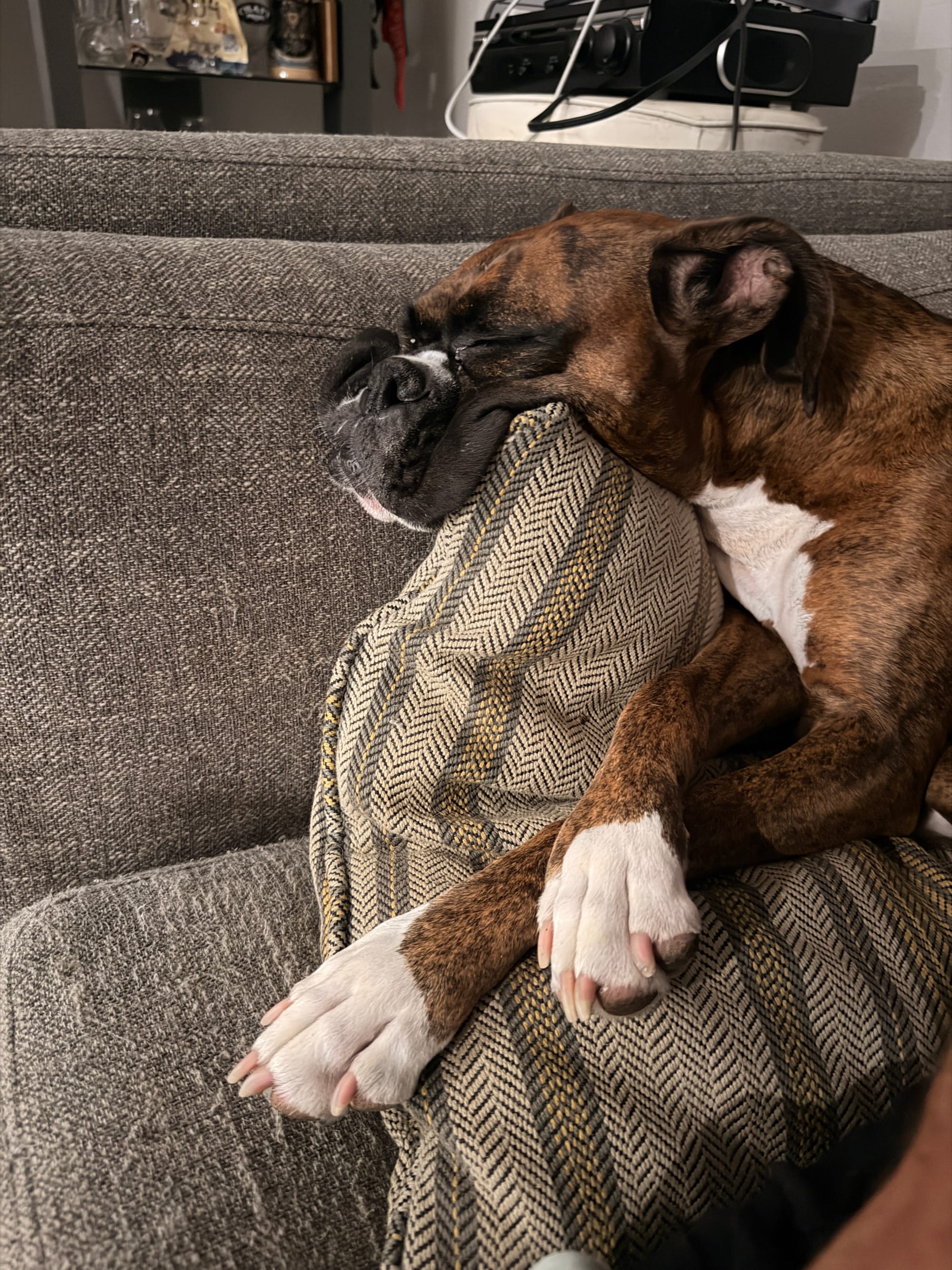
Is It Really Double the Work?
In my experience, no — not exactly.
But it can be double the responsibility.
There is a difference.
The daily routine may not feel twice as hard if:
- you already walk regularly
- you already have a feeding routine
- you already train consistently
- your first dog is stable
- the dogs get along
- you manage resources well
- you have the space and structure
But the responsibility is absolutely doubled.
Two dogs means two health records.
Two personalities.
Two relationships.
Two sets of needs.
Two dogs to monitor.
Two dogs to advocate for.
Two dogs to train.
So while the work may not feel doubled every day, the responsibility should be taken seriously.

When You Should Wait Before Getting a Second Boxer
You may want to wait if your first Boxer:
- is still highly reactive
- pulls uncontrollably on leash
- has serious resource guarding
- struggles with basic obedience
- has severe separation issues
- is not well-socialized
- jumps on guests constantly
- cannot settle indoors
- is still overwhelming you daily
This does not mean you can never get a second Boxer.
It means your first dog may need more foundation first.
The best time to add a second Boxer is when your first Boxer is not perfect, but stable.
Stable means:
- you can manage them
- they trust you
- they understand routines
- they have basic manners
- they can recover from excitement
- they are not creating constant chaos
That is the kind of foundation a second dog can build on.
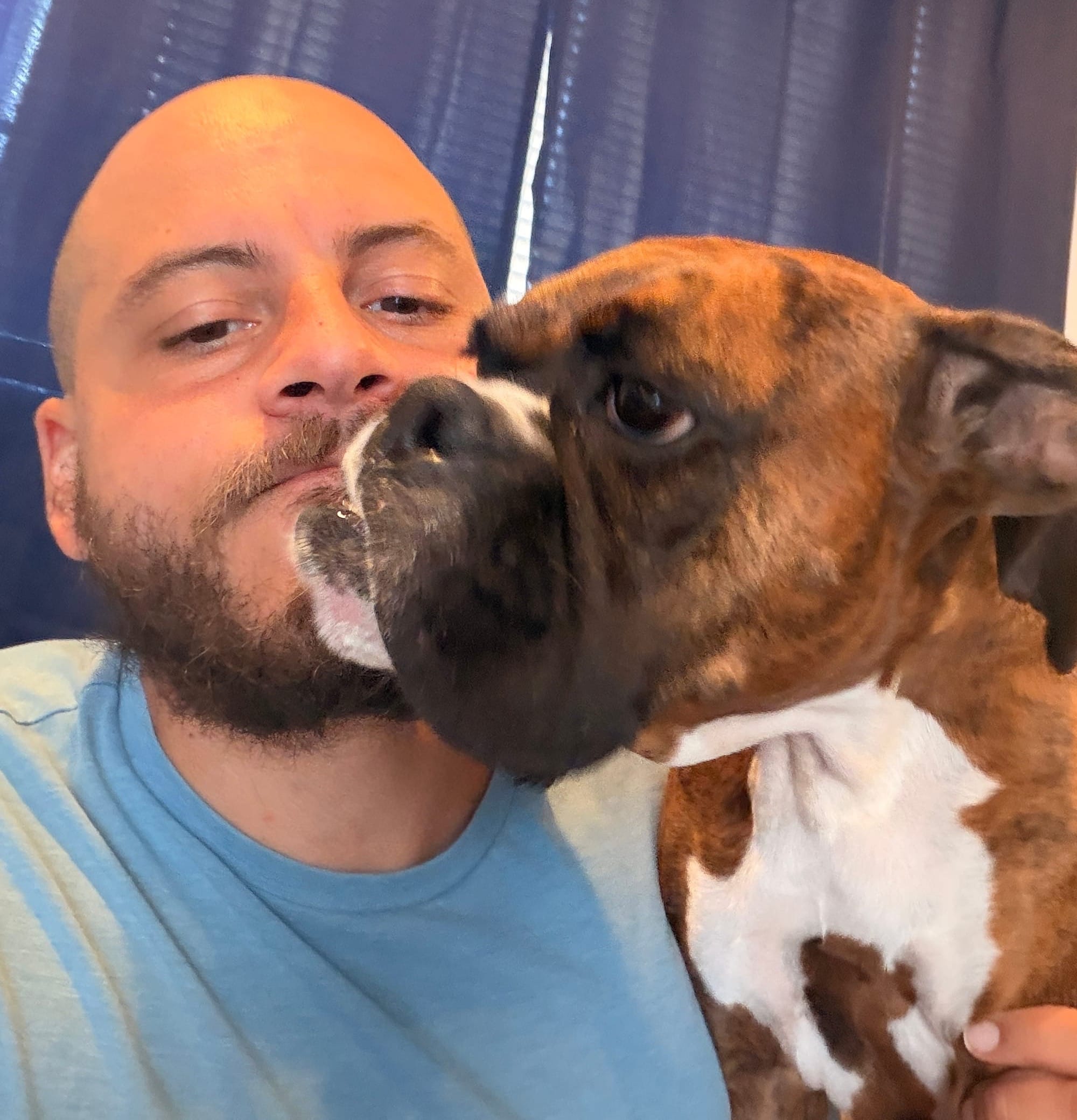
When a Second Boxer Might Be a Great Fit
A second Boxer might be a great idea if:
- your first Boxer is well-mannered
- your first Boxer enjoys other dogs
- you can afford the added cost
- you have time to train both dogs
- you want the companionship of two
- you are ready for more responsibility
- you have a stable routine
- you understand the breed
- you are not using the second dog as a shortcut
In the right home, two Boxers can be incredible.
They bring so much life.
They play hard.
They love hard.
They bond deeply.
They make the house feel full.
And yes…
they give you double the wiggle butts.
My Honest Take
For me, having two Boxers has been worth it.
I love the security of walking with one on each side.
I love watching them play.
I love that they entertain each other but still want to play with me.
I love the balance of having a male and female.
I love seeing how my experience with my first Boxer helped me feel confident with my second.
And I love that my first dog’s training helped create a smoother transition.
But I also know this worked well because the foundation was there.
That is the message I want every Boxer owner to understand.
A second Boxer can be a blessing.
But it should not be a band-aid.
Train the first dog.
Build the routine.
Create the structure.
Earn confidence.
Then, if the time is right, adding a second Boxer can be one of the most joyful decisions you ever make.

Final Thought: Double the Dogs, Double the Bond
Having two Boxers is not just about having two dogs.
It is about building a home with more connection, more rhythm, more responsibility, and more joy.
It is the security of one on each side of you.
It is the comedy of two wiggle butts greeting you.
It is the sound of them playing together.
It is the pride of seeing your training carry over.
It is the responsibility of caring for two lives well.
For the right owner, a second Boxer does not just add more work.
It adds more love.
As always…
Happy bonding.
Helpful Products for Two-Boxer Homes
- double dog leash or leash splitter
- two sturdy 6-foot leashes
- matching collars or harnesses
- elevated dog bowls
- airtight food storage container
- separate chew toys
- dog gates
- crates or crate mats
- slow feeder bowls
- training treat pouch
These tools do not replace training, but they can make a two-dog household easier to manage.
Related Reading
- Is Your Boxer Actually Ready for a Sibling?
- The Walk: What It Means for You and Your Boxer
- Understanding the Working Boxer
- How to Strengthen Your Boxer’s Bond Without Creating Anxiety
Affiliate disclosure: TheBoxerBond may earn from qualifying purchases — at no extra cost to you.